By Ernest Heatley
The first thing you notice at KokoMana isn’t the chocolate.
It’s the sound of nature, rustling trees, birdsong, the morning hum of this beautiful part of Savusavu. Somewhere between the whisper of cocoa leaves and the soft chatter of visitors, you feel the gentle energy of a place very much alive.
A short drive from the little township, KokoMana is a world of its own, where rich cocoa aromas mingle with the babble of travelers who step into the story of chocolate rather than simply tasting it.
While KokoMana has become a must-do in Savusavu, the experience has evolved into an intimate, hands-on immersion, a sensory walk through a Fijian chocolate journey.
Walking the cocoa farm
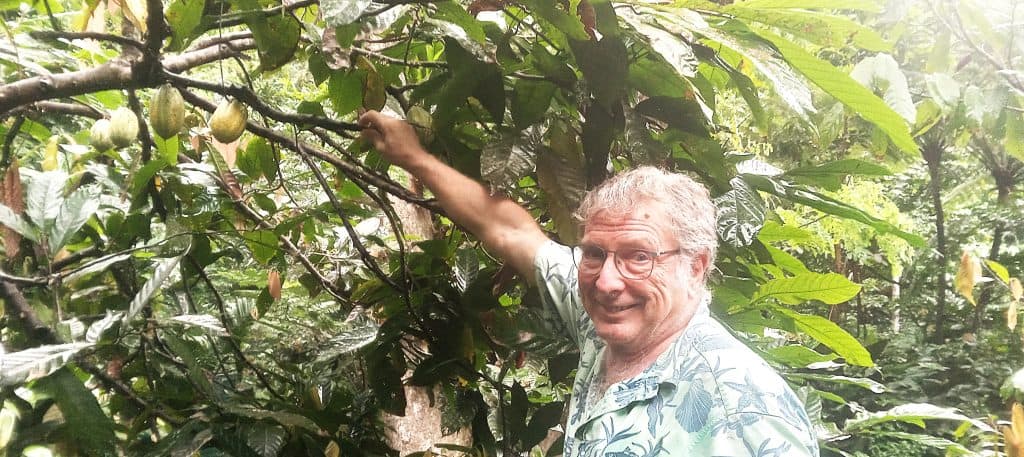
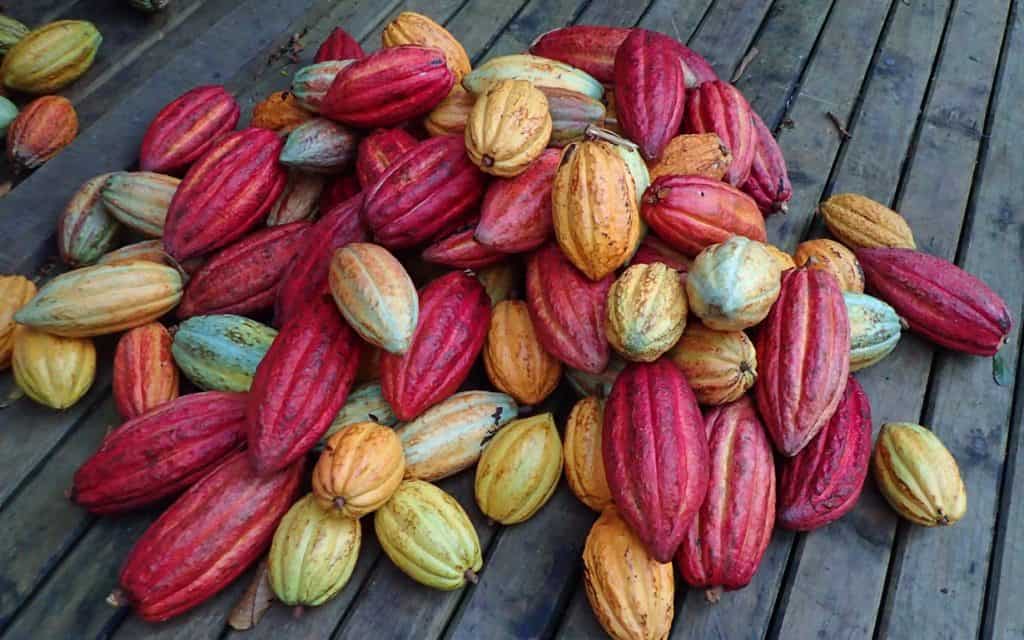
Although I have lived in Savusavu, this was my first time at KokoMana, which is just a stone’s throw from Daku Resort along Lesiaceva Rd. The tour began beneath the shade of cocoa trees, their pods gold, lime green, and deep maroon shimmering in the morning sun. A guide cracked open a ripe pod, revealing glistening white pulp, fruity and tropical. It’s nothing like chocolate but this tangy sweet pulp provides its essence.
Only two acres in size, the farm is tended by a small team caring for some 400 cocoa trees, including varieties developed at Fiji’s Wainigata Research Station in the 1970s, mixed with genetics from Samoa, Papua New Guinea, Peru, and Venezuela. Owners Richard Markham and Anne Moorhead bought the land in 2012 and planted cocoa the following year under a canopy of rain trees and native species.
“We planted the first trees in 2012,” Richard, a trained entomologist and passionate agro-forester, says as he walks the farm. “You see pods after about three years, but good yields come after five. By 20 years, you usually need to replant.”
The plot provides only half the cocoa KokoMana needs; the rest is purchased from nearby communities, relationships built carefully over time and rooted in fair returns for local growers.
Interestingly KokoMana has a team of four cats who take care of the rat problem on the farm. So far, this feline pest control is working.
A small team with a big heart
The trail leads to KokoMana’s tiny factory, where three women oversee fermentation, roasting, bar-making, administration, and tours.
“It’s a small team,” Richard says with a smile. “Three on the farm, three in the factory. The boys handle the field work; the ladies look after the careful work and the visitors.”
Despite its size, KokoMana produces around 200 bars a week, aiming for 500 as demand grows. Tourists, cruise passengers, boutique resorts, and Suva outlets form part of an emerging market that values locally made, sustainable chocolate.
Experiencing the chocolate magic
To enter the fermentation shed is to step into a warm, fragrant world where cocoa begins its transformation. A young worker diligently tends to the pods drying on the racks. Wooden bins breathe fruit-and-earth aromas as visitors follow the journey to drying racks, the roasting room, and the small production area where the whir of machinery signals the birth of chocolate.
KokoMana’s core recipe is simple: 70% cocoa nibs + Fiji cane sugar = pure Fijian dark chocolate.
This involves no emulsifiers, no additives, just honest flavors shaped by land and craft.
Flavored bars, sea salt, chilies, chai masala, and treats like chocolate-coated ginger and toasted coconut showcase Pacific creativity. Richard’s eyes brighten as he hints at future products using tavola nuts, vutu, ginger, and honey from Ra.
A thriving landscape
Beyond the factory, Richard leads visitors through an area once considered “severely degraded land.” Today it’s a thriving mosaic of regeneration.
The sheer variety of plant species is stunning.
“We used a lot of vavai (raintree) for the land restoration,” he explains. “We cleared the weeds, added vavai, then planted bananas, papayas, vudi (plantain), anything that would suppress weeds and rebuild organic matter.”
Dawa, mango, tamarind, jackfruit, and avocado now flourish. Diversity, not depletion, defines the farm. Richard’s conversation drifts to cocoa varieties, from century-old Trinidadian lines to Fiji’s Wainigata cultivars.
“There’s a lot of talk about terroir,” he says, “but I think fermentation plays the biggest role. A single bin may have 15 varieties of yeast and 20 types of bacteria. Each adds its own chemical signature to the chocolate.”
Amidst a few bulas to visiting tourists admiring the farm we made our way to the chocolate making area.
Ana Finau’s five stages of chocolate
The tour’s finale belongs to Ana Finau, KokoMana’s soft-spoken but masterful chocolate artisan. In the small production room, she guides visitors through her process with steady confidence. “This is how I normally present my chocolate journey,” she begins.
She starts with drying and resting, beans sealed for four to six months to deepen flavor. Roasting follows, using a simple household oven at 120°C for 40 minutes, releasing KokoMana’s signature aroma. Cracking comes next, which Ana approaches with a grin. Instead of industrial machinery, she uses an ordinary juicer. “It works perfectly,” she says.
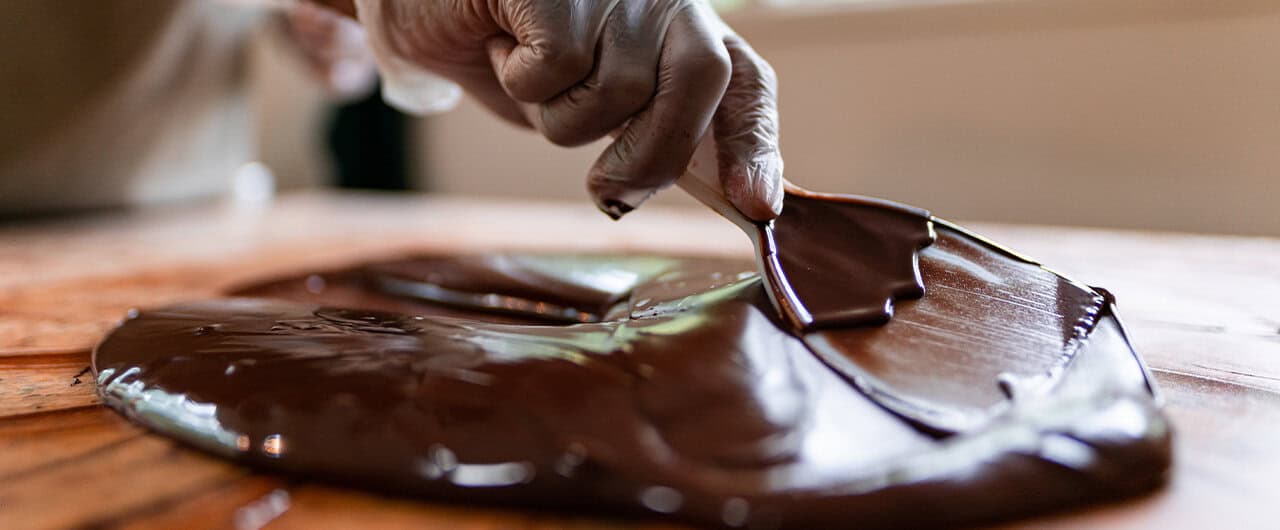
A compact winnower removes the husks, and finally the nibs, combined with locally grown cane sugar, are ground in an Indian spice grinder. “Sixteen to eighteen hours,” Ana says, “and you get this creamy chocolate paste. This is the moment everyone says, ‘Wow.’”
Her pride shines. “We don’t add anything else, just pure cocoa and sugar. Simple, local, and real.”
Empowering Vanua Levu communities
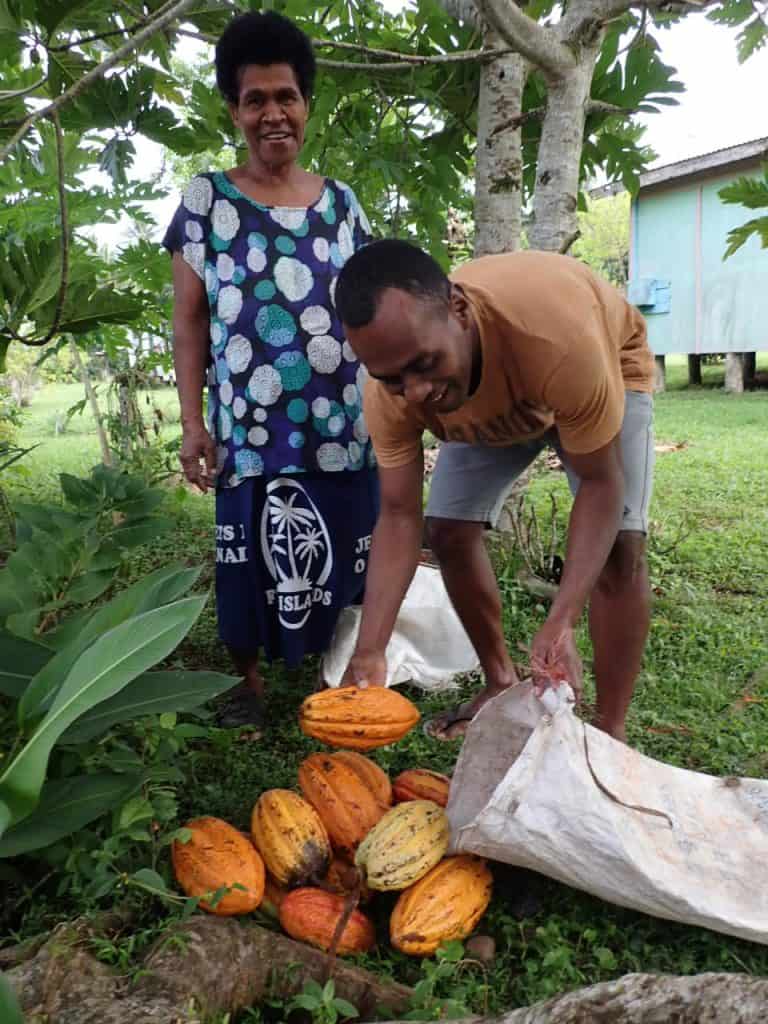
Much of the cocoa Ana uses comes from small village farms around Vanua Levu. By buying pods directly from growers, KokoMana ensures income stays in rural communities, helping families pay school fees, supporting household livelihoods, and reviving confidence in a crop many had abandoned.
The impact reaches beyond economics. Villagers describe KokoMana as both buyer and partner, sharing knowledge on fermentation, drying, and crop care to improve quality and sustainability.
Meanwhile, the final stop for me was the tasting pavilion, where flights of chocolate reveal notes of raisin, citrus, toasted nuts, and warm spice. Here, Richard’s philosophy becomes clear:
“Don’t compete with mass-market producers on price, compete on quality. Use Fiji’s strengths. Celebrate local ingredients. Protect our environment.”
Organic practices, careful land stewardship, and sourcing directly from Vanua Levu farmers make sustainability a lived reality rather than a marketing phrase.
A Growing future
Though KokoMana is buzzing again with tourists, its future remains grounded in humility.
“We’d like to get a bit bigger,” Richard says. “But thoughtfully. Quality first, always.” It’s a sentiment that captures KokoMana perfectly, steady growth, rooted in community, strengthened by authenticity, and shaped by the simple joy of sharing specially made Fijian chocolate with the world.