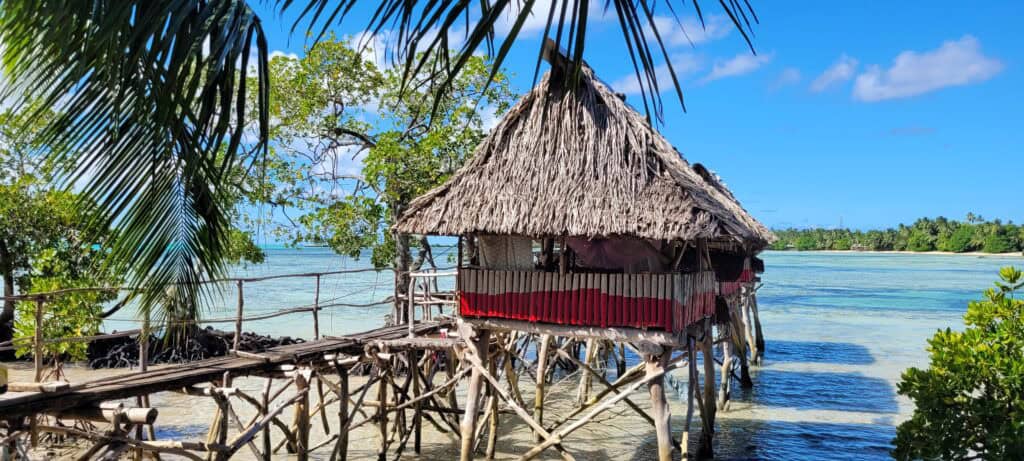
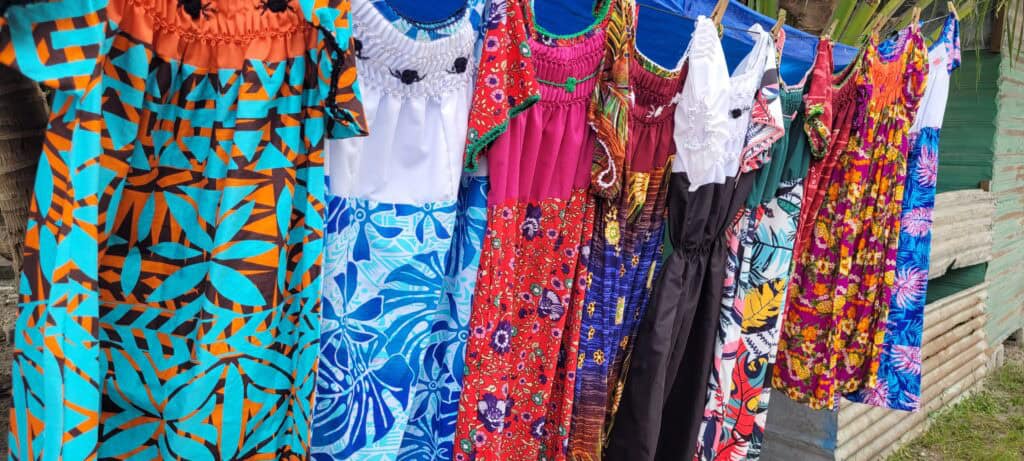
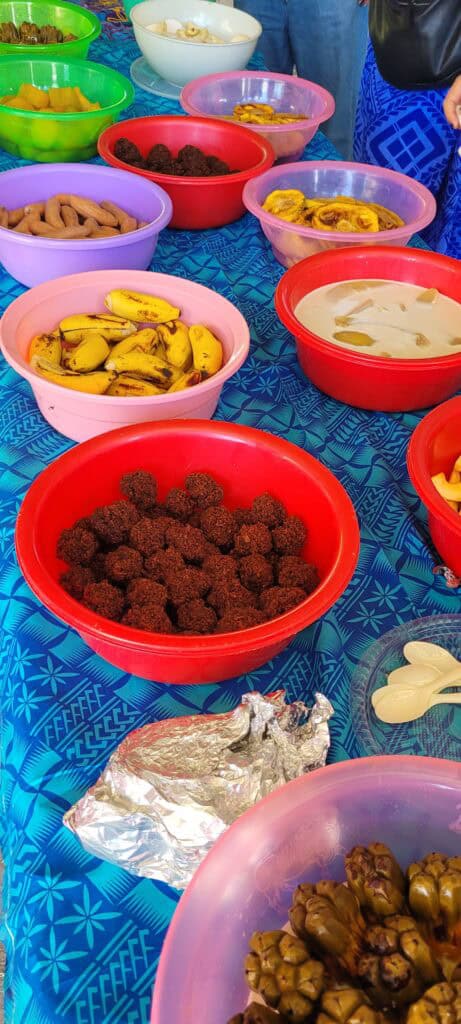
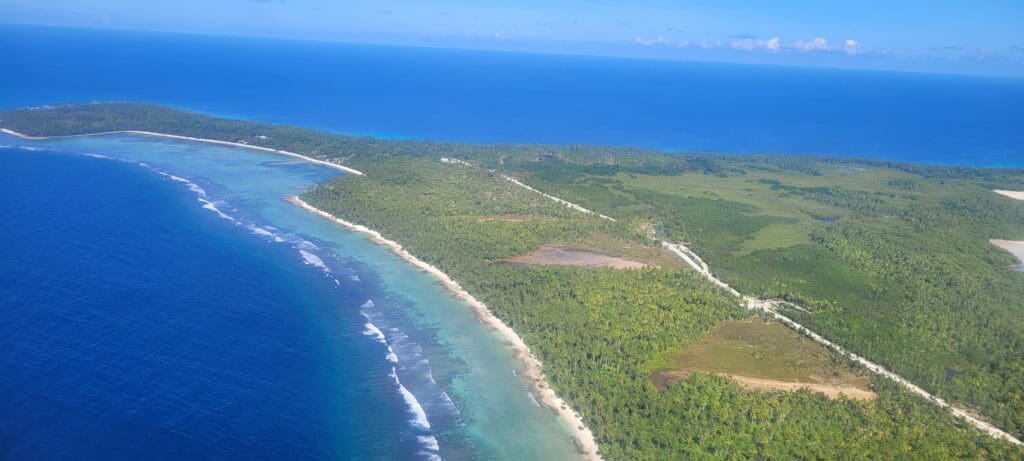
Journeying through tunnels of green in Butaritari Island in Kiribati, we have little idea of what awaits us. Spilling from the vehicles we have rented, we take a short walk to the seaside and are greeted by a table shaded by trees, festooned with vibrant tie-dyed fabric, and groaning with basins of food.
The scene could not be more idyllic.
Lobsters are lined up on a second table, alongside fresh drinking coconuts. Other bowls hold fish done several ways, pumpkin, cooked bananas, and root crops. It is warm; there is not a wisp of cloud in the sky, but we’re comfortable, cooled by the sea breeze and the shade.
Everything tastes incredible. The combination of fresh air, the fact we are eating together at leisure, the curling of our toes into the sand, the views of verdant vegetation on one side and countless shades of blue ocean to the other, seasons the food.
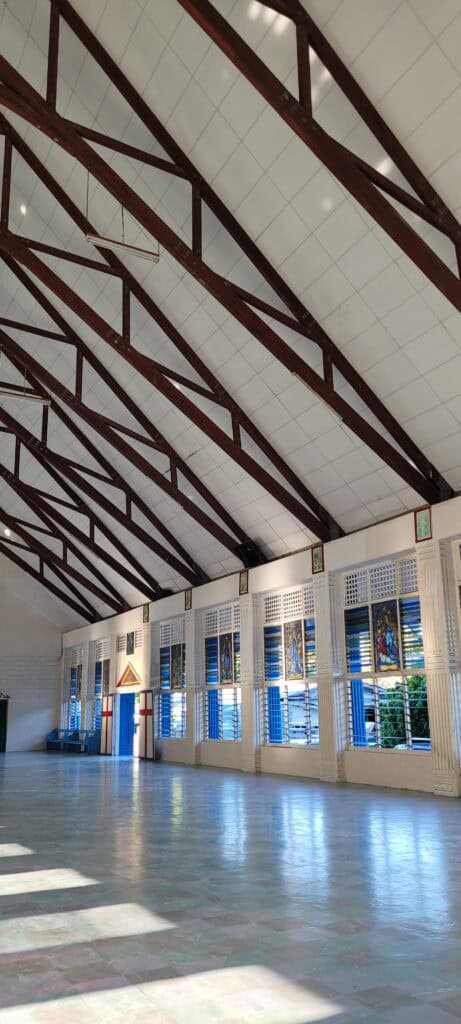
We have come to Butaritari with my mother-in-law Winnie and her extended family. They left the island of their birth in the upheaval of World War Two for Fiji. Now her extended clan has converged in Kiribati from Fiji, Australia, Canada and New Zealand, to trace their roots. It’s a trip filled with deep emotion and memory. While their departure from Kiribati may have been difficult, the return is joyful.
It is also an opportunity to experience some of what Butaritari, in the north of Kiribati’s Gilbert Island group, has to offer visitors. Kiribati tourism authorities are keen to promote the destination for travellers seeking deeply rooted community experiences.
Certainly what we experienced felt like it was driven by the communities who hosted us, natural and genuine, and not over-rehearsed.
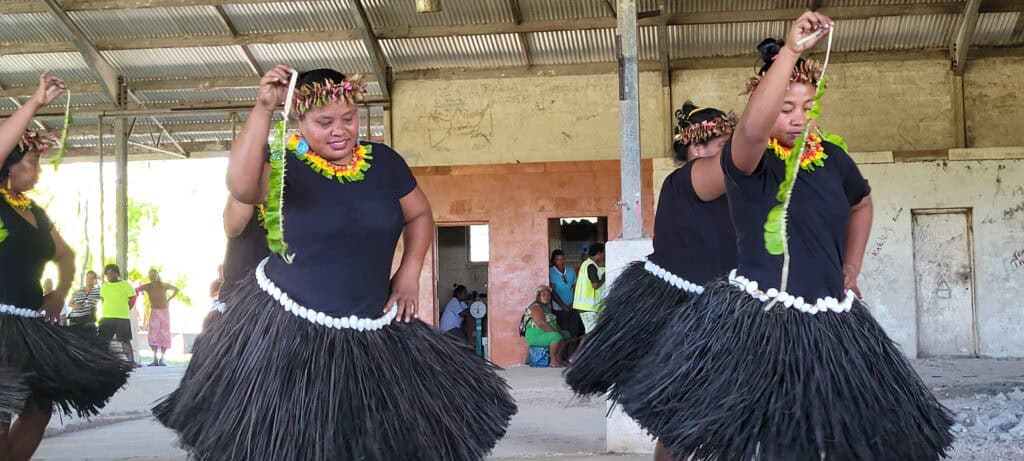
Landing in Butaritari, we wander into an open sided, concrete block building flanking the airstrip. Taking the seats and a sip of the coconut juice awaiting us, we are welcomed by a community leader, and explain our group’s links to the island. Then it is time for song and dancing, first by young women from the nearby village and then with us. Be ready to dance in Kiribati; we found ourselves many times on the dance floor or being asked to ‘present an item’; as it is a beautiful expression of culture and a way to connect.
Our first feast of the day followed, morning tea featuring pandanus fruit cooked in coconut milk, dangerously moreish coconut and sugar balls, and lots of fruit (a blessing after a few days in Tarawa where fruit can be hard to come by) including bananas prepared in many different ways.
Between meals, our time in Butaritari included visiting places where the family had lived, scenic drives past traditionally thatched villages and a refreshing ocean swim.
The Tourism Authority of Kiribati is working with village communities to offer experiences such as snorkelling, exploring coral plantations and clam farms, tours of WW2 sites, agritourism and other cultural activities on the island. Our trip was very brief, but the prospect of more activities and the beauty of the island, are certainly incentive to return.
South Tarawa
Our pilgrimage to Kiribati also saw us spend a few days in South Tarawa to meet more relatives and explore this part of the country.
You will not find five-star resorts in Kiribati, but the places we stayed at were clean and comfortable, and could accommodate our large group. Amongst the highlights of our visit besides family gatherings, was a day trip to North Tarawa and nearby sandbanks, where we picnicked, swam and admired the views.
South Tarawa is densely populated, and travelling from one end to the other can take a while, as there is essentially just one long and busy road, with islands connected by causeways. But because villages and houses line the entire stretch— apart from the bridges between them—there is lots to see as you make this trip. In early mornings we saw children practicing their dancing in groups and adults exercising, men wading into the ocean and lagoon with their fishing nets, churches of all shapes, sizes and hues, and the bustle of commerce at the many stalls.
We enjoyed sunset drinks and meals at the Horizon Cafe, morning coffees at Chatterbox (which also has a lovely handicraft store and some good local books), a trip to the compact but interesting national museum, and handicraft shopping at the main Catholic Church compound.
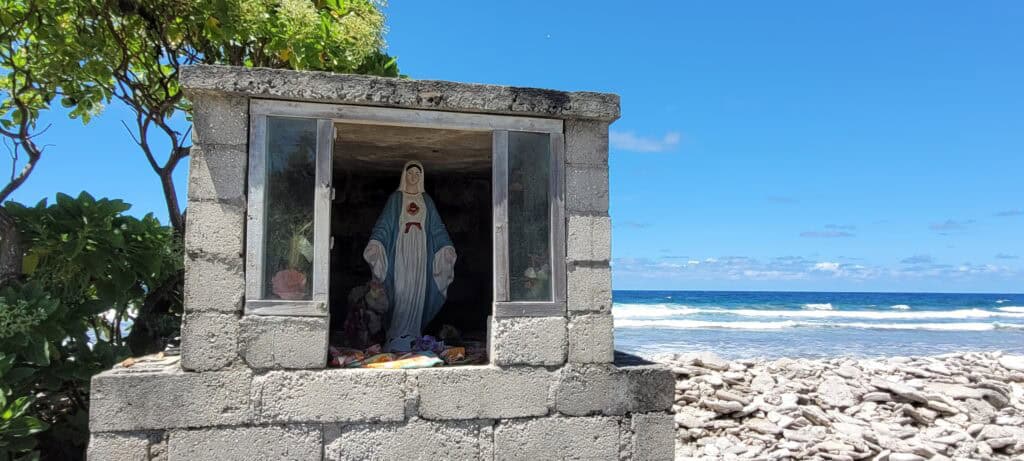
Kiribati’s location means it continues to be the focus of global geopolitical attention. In WW2 it was the site of the Battle of Tarawa. Butaritari—an important air and sea base for Japanese forces—was also the site of fighting, and a US victory. Visitors to Tarawa can still see war relics, and at the Catholic church compound, the one-room archive holds an original, and now restored, Japanese declaration of war signage.
Other activities include game fishing, and much further afield—0Kiribati is after all the only nation to span all four hemispheres— you can surf at Fanning Island, or go diving and birding in the Phoenix Islands Protected Area.
For us, the opportunity and time to share stories across the generations was precious. Kiribati gives you that time; it is not a destination that demands a busy schedule. If you want the luxuries that come with traditional resorts and access to a wide variety of diversions, it is not for you. However if your idea of luxury is the space to tell stories, think and gaze at the vast horizon, Butaritari and Kiribati’s many islands are just right.
Tips
Fiji Airways flies directly to Kiribati (Tarawa) twice a week fijiairways.com
Air Kiribati flies to Butaritari PH: 686 74028533 [email protected]
Kiribati Tourism can connect you with accommodation and tour options. You need to plan for your visit to Butaritari. There are limited accommodation options available. Kiribati Tourism can connect you with vehicles, overwater bungalows and tours operators before your trip. kiribatitourism.gov.ki