


Page 13 - Fiji Traveller 9
P. 13
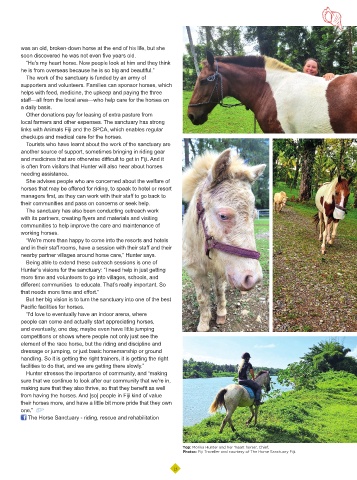
was an old, broken-down horse at the end of his life, but she
        soon discovered he was not even five years old.
          “He’s my heart horse. Now people look at him and they think
        he is from overseas because he is so big and beautiful.”
          The work of the sanctuary is funded by an army of
        supporters and volunteers. Families can sponsor horses, which
        helps with feed, medicine, the upkeep and paying the three
        staff—all from the local area—who help care for the horses on
        a daily basis.
          Other donations pay for leasing of extra pasture from
        local farmers and other expenses. The sanctuary has strong
        links with Animals Fiji and the SPCA, which enables regular
        checkups and medical care for the horses.
          Tourists who have learnt about the work of the sanctuary are
        another source of support, sometimes bringing in riding gear
        and medicines that are otherwise difficult to get in Fiji. And it
        is often from visitors that Hunter will also hear about horses
        needing assistance.
          She advises people who are concerned about the welfare of
        horses that may be offered for riding, to speak to hotel or resort
        managers first, as they can work with their staff to go back to
        their communities and pass on concerns or seek help.
          The sanctuary has also been conducting outreach work
        with its partners, creating flyers and materials and visiting
        communities to help improve the care and maintenance of
        working horses.
          “We're more than happy to come into the resorts and hotels
        and in their staff rooms, have a session with their staff and their
        nearby partner villages around horse care,” Hunter says.
          Being able to extend these outreach sessions is one of
        Hunter’s visions for the sanctuary: “I need help in just getting
        more time and volunteers to go into villages, schools, and
        different communities  to educate. That’s really important. So
        that needs more time and effort.”
          But her big vision is to turn the sanctuary into one of the best
        Pacific facilities for horses.
          “I'd love to eventually have an indoor arena, where
        people can come and actually start appreciating horses,
        and eventually, one day, maybe even have little jumping
        competitions or shows where people not only just see the
        element of the race horse, but the riding and discipline and
        dressage or jumping, or just basic horsemanship or ground
        handling. So it is getting the right trainers, it is getting the right
        facilities to do that, and we are getting there slowly.”
          Hunter stresses the importance of community, and “making
        sure that we continue to look after our community that we're in,
        making sure that they also thrive, so that they benefit as well
        from having the horses. And [so] people in Fiji kind of value
        their horses more, and have a little bit more pride that they own
        one.”
           The Horse Sanctuary - riding, rescue and rehabilitation


                                                             Top: Morika Hunter and her 'heart horse', Chief.
                                                             Photos: Fiji Traveller and courtesy of The Horse Sanctuary Fiji.


                                                          13

