By Ben Wheeler
In 1987 the world marvelled at The Running Man, a shiny Arnold Schwarzenegger vehicle based on a dark, esoteric Stephen King novel and set in the seemingly far away and distant future that was 2025.
King looked at the worst parts of society at the close of the 1970s and the dawn of the 1980s and wondered what would happen if they were allowed to run unfettered for the next few decades.
Here we find the population of America compulsively consuming media products that demonise the poor, disillusioned and marginalised through AI generated misinformation and deepfake technology, ensuring that the most vulnerable turn on each other rather than the tech broligarchy that is pulling society’s strings.
Now you’re thinking, ‘is this the real US or the book?’ Both, as it turns out, plus the plot of Edgar Wright’s remake of The Running Man.
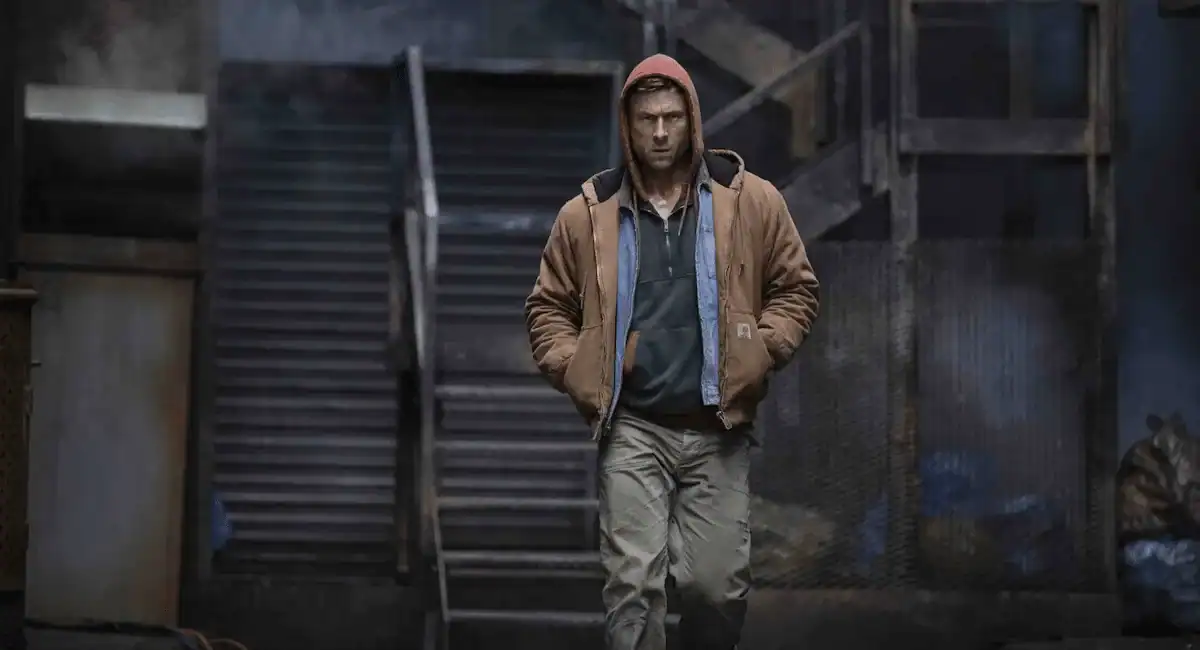
Our hero Ben Richards (Glen Powell looking like Tom Cruise and sounding like George Clooney) is linked with labour unions in the film’s hurried first act, and his persistent habit of looking out for his fellow workers rather than the money men has left him unemployable, and his family unable to afford basic medical treatments.
It is under these circumstances that our hero, out of sheer desperation, signs up for the reality show The Running Man, the concept of which will be familiar to fans of any of its derivatives, from the ultra-violent and super stylish Japanese film Battle Royale to the adaptations of The Hunger Games series or the streaming hit Squid Game.
And so, on the run Richards goes, for a show that is eerily reminiscent of the US right now, where the powerful are sending masked operatives out into the streets and the general population is encouraged to get in on the action.
Happily, Richards finds there are indeed people who share his broadly altruistic tendencies and are, in their own ways, fighting the same powers. There is Bradley Throckmorton (Daniel Ezra) whose YouTube-ish channel The Apostle turns a critical eye on The Running Man show, demonstrating how The Network that produces it deceives and manipulates its audience.
There’s also Elton Parrakis (played by Michael Cera), whose mission to expose corrupt local cops and clear the name of his late father sees him print revolutionary zines and protect himself with a hilarious Home Alone-style booby-trapped house.
Both characters represent the potential for resistance through independent, non-corporate media. Parrakis’s return to the printing press suggests a high-water mark of device-driven connection to the world, a place where the digital wave could roll back, and we could explore more traditional practices as entry points to knowledge about the world.
Come on let’s switch off our phones and actually engage with each other for a change!
No? It’s just me?
The baddies are also extremely well cast, with Josh Brolin and Coleman Domingo camping it up as the villainous showrunner and host. There are some funny moments with the Americanos, a satirical spin on those Real Housewives and their progenitors the Kardashians.
The Running Man is not perfect. It lacks the signature wit and visual flair we’ve come to expect from director Edgar Wright, it criminally underuses some great female actors, and its slavish fidelity to the book leaves it clunky in places.
But cinematically The Running Man is great fun, with action set pieces and musical numbers deployed with surgical precision, beautiful world-building, snappy editing, and a nod to Schwarzenegger that – like the film itself – will make you chuckle before remembering the sheer proximity of this supposed satire to the time in which we’re living.
The Running Man is currently showing in cinemas across Fiji.