By Ema Ganivatu
The final night of the 5th Pacific Human Rights Film Festival in Suva gave audiences an unforgettable experience through the screening of Ocean with David Attenborough.
Hosted by the Pacific Community (SPC) in partnership with the United Kingdom in Fiji, the event brought powerful reflections on the beauty of the ocean and the dangers it faces.
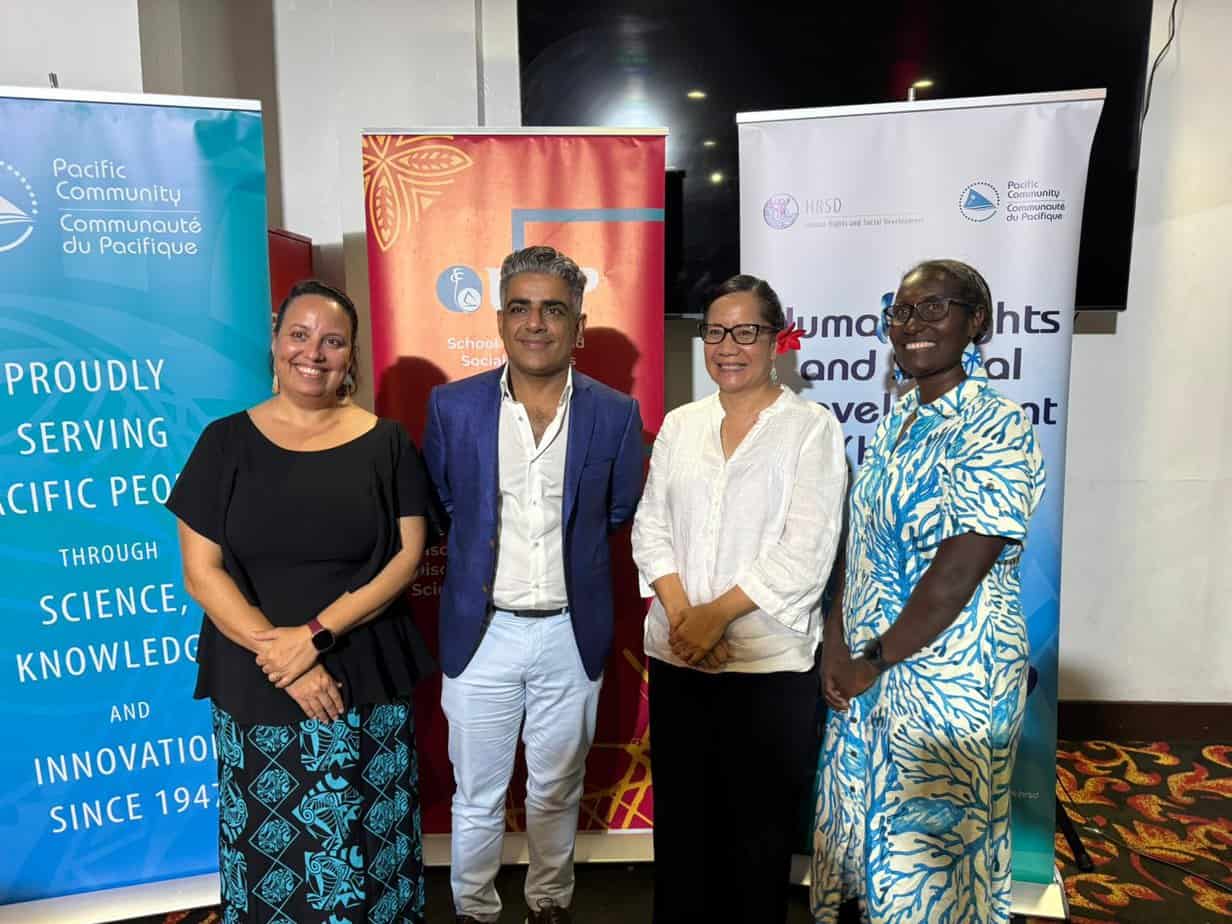
United Kingdom’s High Commissioner to Fiji, Kanbar Hossein-Bor, opened the post-screening panel discussion with a personal reflection on the film. “David Attenborough was the voice of my childhood,” he said. “The film was a rollercoaster of emotions from awe at the ocean’s beauty to shock at the destruction happening beneath the surface.”
He said the documentary made him pause and reflect on his own habits. “What can I do as an individual?” Yet, he saw hope. “The ocean has this magical power to heal itself. That’s the message we must hold onto.”
Importantly, he pointed out that ocean conservation must not leave traditional communities behind. “Fishing isn’t the enemy; many Pacific people rely on it. We must empower them to protect and live from the ocean, not push them out of the conversation.”
Adding another layer of insight was Dr. Manu Tupou-Roosen, Acting Deputy Vice-Chancellor at the University of the South Pacific. She said the film hit close to home, describing it as “powerful” and “deeply emotional.”
“For us in the Pacific, the ocean is not just a natural resource, it’s who we are. It shapes our identity, our way of life, and our stories,” she said. “We are 96% ocean. That connection runs through our veins.”
Dr. Manu stressed that conservation in the Pacific must be about balance between protecting ecosystems and ensuring livelihoods. “I’ve spent years working in fisheries. We know the ocean can provide food and economic growth, but it must be done sustainably in harmony with nature.”
She also called for investment in young people, who will lead future ocean efforts. “Our five-year-olds today are our leaders in 2050. We must prepare them through education that blends formal science with traditional knowledge. That’s how we grow true ocean custodians.”
Dr. Katy Soapi, a marine scientist and coordinator at the Pacific Community Centre for Ocean Science, added her own powerful reflections. “When I saw the little fish swimming for its life, it broke my heart,” she said.
“The ocean is our identity, our medicine, our way of life. But our communities need real support to protect it.”
As Pacific nations lead global conversations about ocean protection, their message is clear: this is more than conservation, it’s about culture, identity, and survival.