By Lydia Rickard
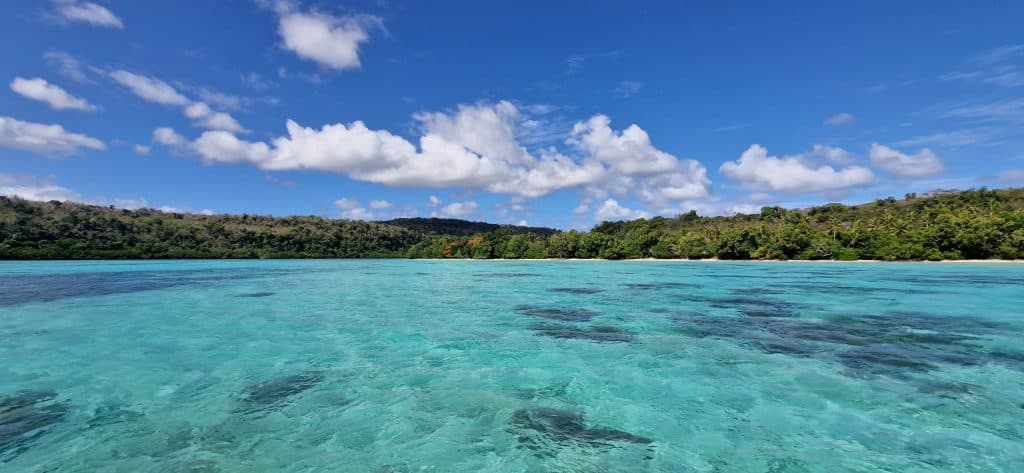
If you want to start your days surrounded by natural beauty, gazing into azure waters whilst sipping on lime juice and savouring fruit harvested from adjacent gardens, then Moso life is for you.
Moso is a speck of an island, just a few clicks from the mainland. From Vanuatu’s capital, Port Vila, it is a 40-minute drive followed by a 10-minute boat ride. Once aboard, you’ll be travelling through the waters of the Namoso Passage, arriving at the car-free, eco retreat known as Moso. To move around the island, you’ll embrace the salty life and hail a local fisherman or take the ‘Kastom Rod’ – a bashed-out footpath around the island that runs along the southern coastline.
You can experience barefoot luxury at The Moso Resort where you’ll feel pleasantly isolated from the rest of the world. Alternatively, the rustic Tranquillity Dive Resort with its backpacker vibe might be appealing. Independent travellers will delight in The Watermark, a few self-catering cottages that let you indulge in the fantasy of living in paradise. Whatever your decision, you’ll experience off-grid, eco-friendly living with a genuine absence of greenwashing.
Here, electricity is powered by the sun, rainwater is stored in tanks, wastewater is treated with septic and rubbish is separated, composted or returned to the mainland for recycling. Locals and guests alike embrace these practices, which help maintain the natural beauty of the island.
Of course, the Moso life does not come without challenges. An off-grid eco paradise sounds pretty on paper but harsh realities mean that the local Ni-Vans are vulnerable to unpredictable weather patterns; rain can fall heavily or in some cases not at all.
With no connection to the mainland, water is a precious commodity. Livelihoods based around fishing and growing crops are impacted. Living traditional lifestyles can become a burden as the cruel irony of those living the most organic of lifestyles are the most profoundly impacted by climate change.
Those below the water have challenges too. Once a common sight in the waters surrounding Moso, the much-revered dugong is becoming more difficult to locate in the Namoso Passage.
What was once a luscious meadow of seagrass, the ideal feeding grounds for these docile giants, is now mere patches of its former glory. The ongoing climate crisis has cruelly impacted on the livelihoods of the dugong. Climate change is increasing the frequency and intensity of cyclones across the Pacific. Heavy
rains cause sediment to lay on the ocean surface, blocking vital sunlight from nourishing plant life. Seagrass meadows become eradicated.
In May 2023, Vanuatu had the unfortunate experience of having twin cyclones. This has had a devastating impact on the sea meadow ecosystem and ultimately, the dugong. The seagrass meadows were destroyed resulting in a loss of home and habitat for the dugong. Once a dugong has lost its feeding ground, it is forced to search for alternatives. Expending considerable energy locating alternative food sources can lead to its demise.
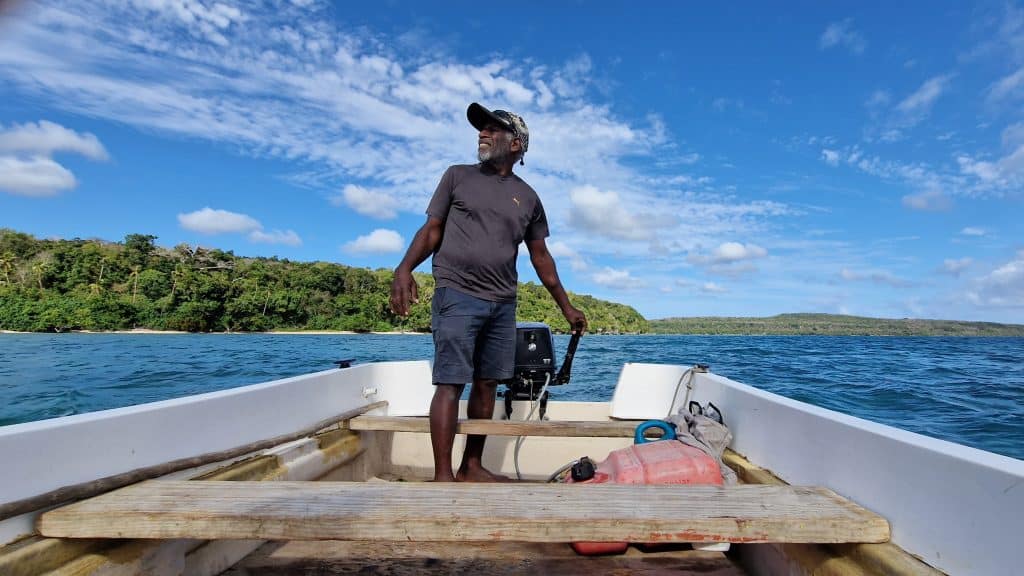
Moso-man, Pastor Nolan took me on a boat journey for a hopeful tour of the Namoso Passage. Passing by a wrecked super yacht, courtesy of 2016’s Cyclone Pam, we search in vain for a glimpse of a dugong. Seeing a rare ocean giant, so close to extinction, is indeed a rare privilege. Perhaps a few will see
one. Perhaps more will be encouraged to delve deeper into the dugong‘s plight.
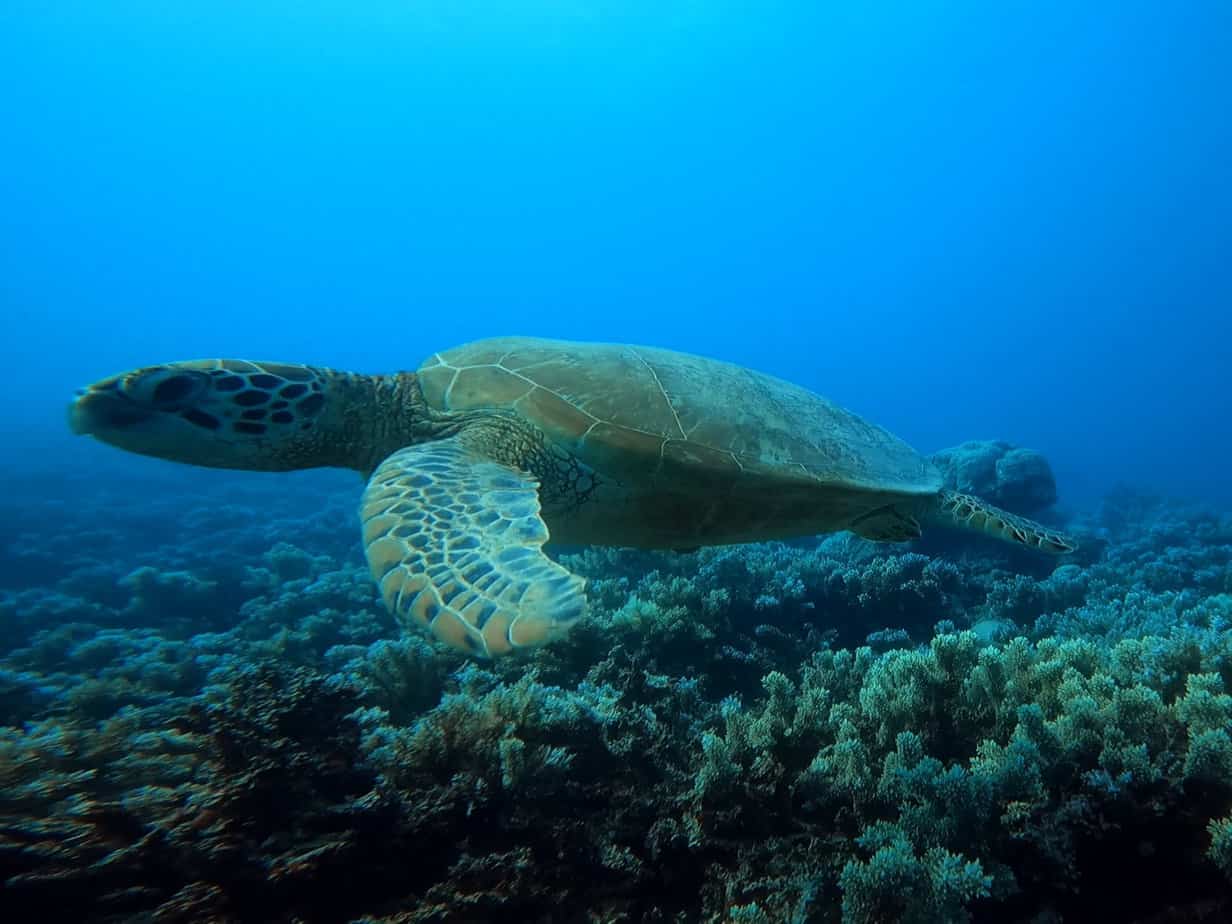
While seeing a dugong may only be a dream, life thrives on other corners of the island. Patches of coral reefs are home to curious turtles and colourful fish, and the fertile jungle grows fruits in abundance. Moso is a place of quiet contemplation and gentle activity. It offers the chance for its visitors to discover Island
Time.