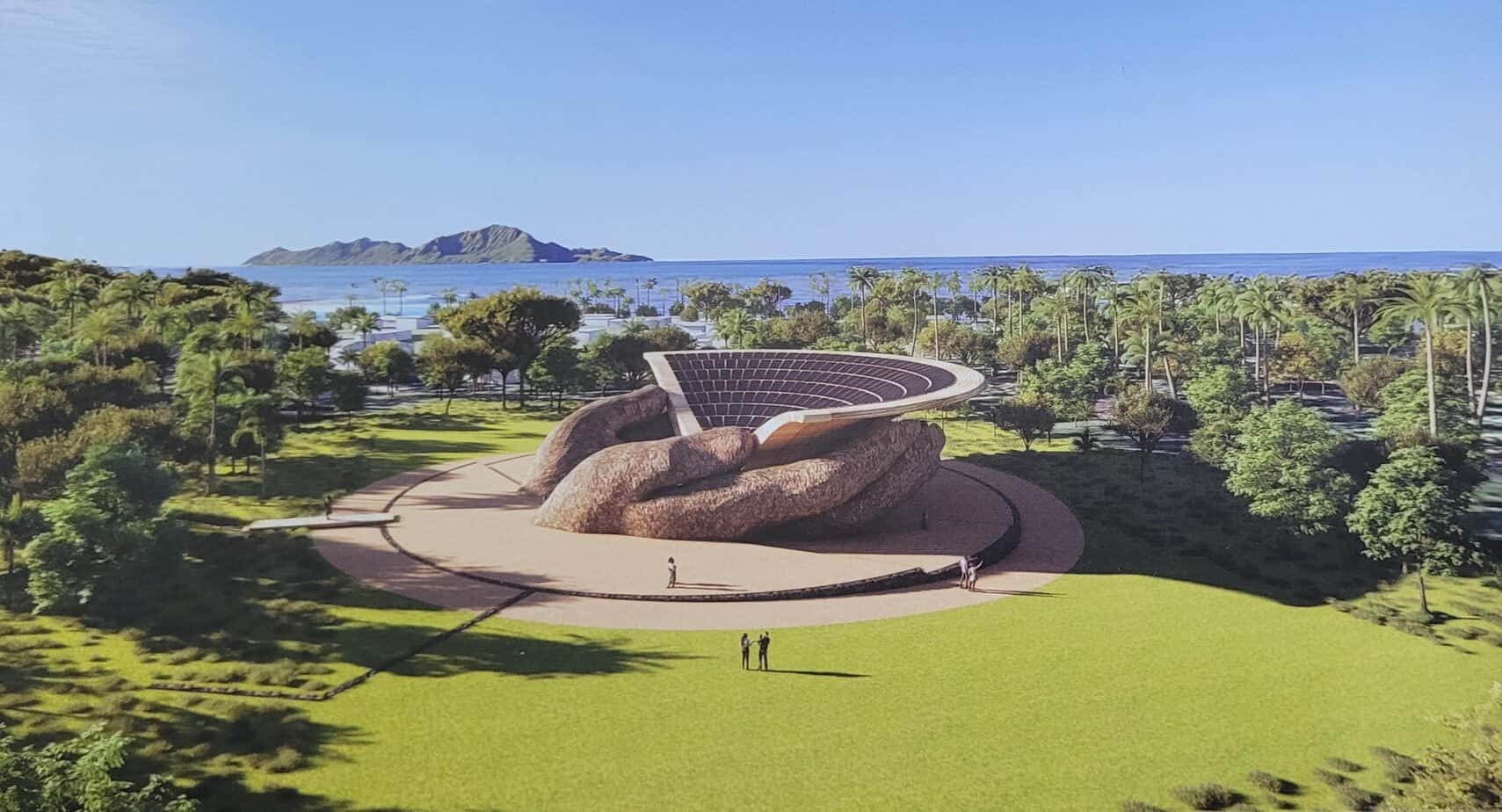
Imagine a huge pair of hands cradling a bilo (cup) lined with solar panels rising from the grasslands of a Fijian island.
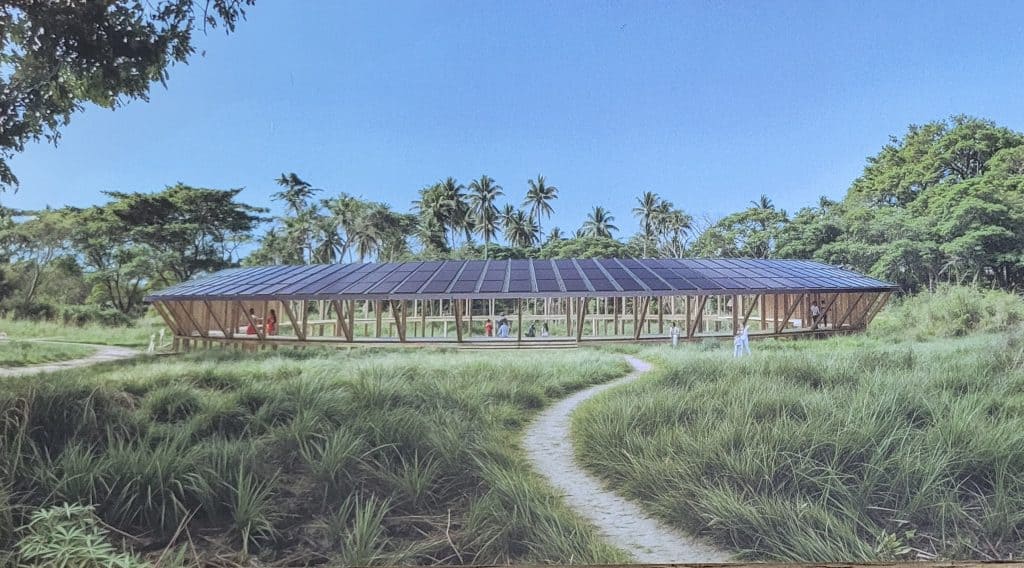
Or an enormous circular ring, roofed with solar panels which shade a well-used timber platform carved with abstracted versions of traditional motifs.
Those are the visions of the two winning designs in the Land Art Generator Initiative, or LAGI for short, which has come to the Pacific for the first time.
The site for one of these beautiful structures—which marry utility, sustainability and art— will be Marou village, Naviti in the Yasawa group of islands.
LAGI Co Directors Elizabeth Monoian and Robert Ferry say abbreviating the Land Art Generator Initiative to LAGI back in 2008 was a pragmatic decision but, “We never imagined that, years later, the acronym would carry unexpected layers of meaning.
“In the Fijian language, lagi refers to the sky, to the heavens above. It speaks to the realm of ancestral presence and divine energy. It is from the lagi that rain falls and from which sunlight shines.”
Their hope now is that the sculptural structure that is eventually built in Marou will use that sunlight and rain to improve the lives of the villagers, and that it can perhaps be replicated across other parts of Fiji and potentially, the region.
Bringing LAGI to the Yasawas
Fiji’s government wants 100% of its energy needs to be met from renewable sources by 2030. Just over half of its energy is already coming from renewables, predominantly hydropower.
Yet the full potential for solar is still untapped.
LAGI 2025 challenged designers to create a solar solution for Marou Village that also included rainwater harvesting and storage, as the people of Naviti experience long periods of drought.
More than 200 submissions from 45 countries were received. In addition, 36 universities were involved, including the University of Fiji, which is headquartered in the country’s west. Other designs included solar arrays that looked like boats washed inland, leaves, a field of flowers, woven baskets, waves, clouds, trees and forests.
At the unveiling of the winning entries in Suva in November, Deputy Prime Minister for Tourism and Civil Aviation, Viliame Gavoka said the initiative brings together “art and technology, tradition and imagination—showing how beautiful and inspiring the future of clean energy can be when guided by culture and community.”
He continued: “This collaboration reminds us that innovation is strongest when it grows from the ground up—rooted in culture, guided by local wisdom, and shared with the world.”
The people of Marou have been consistently and intimately involved in the process. Acting Chief Ilaisari Naqau Nasau thanked the LAGI team for bring ideas from around the world to Naviti’s shores.
“The proposals you have shared- systems for energy and water that we could never have imagined- will not only benefit us today, but will also support our future, and the futures of our children and grandchildren.
“While delivering what we have long needed-power and safe water-it also brings with it the hope of greater resilience for our island.”
The people of Marou Village have proposed establishing an electric cooperative to manage membership, collect kWh tariffs and govern the use of funds for maintenance and reinvestment, and are working with government officials on this part of the process.
From concept to prototype
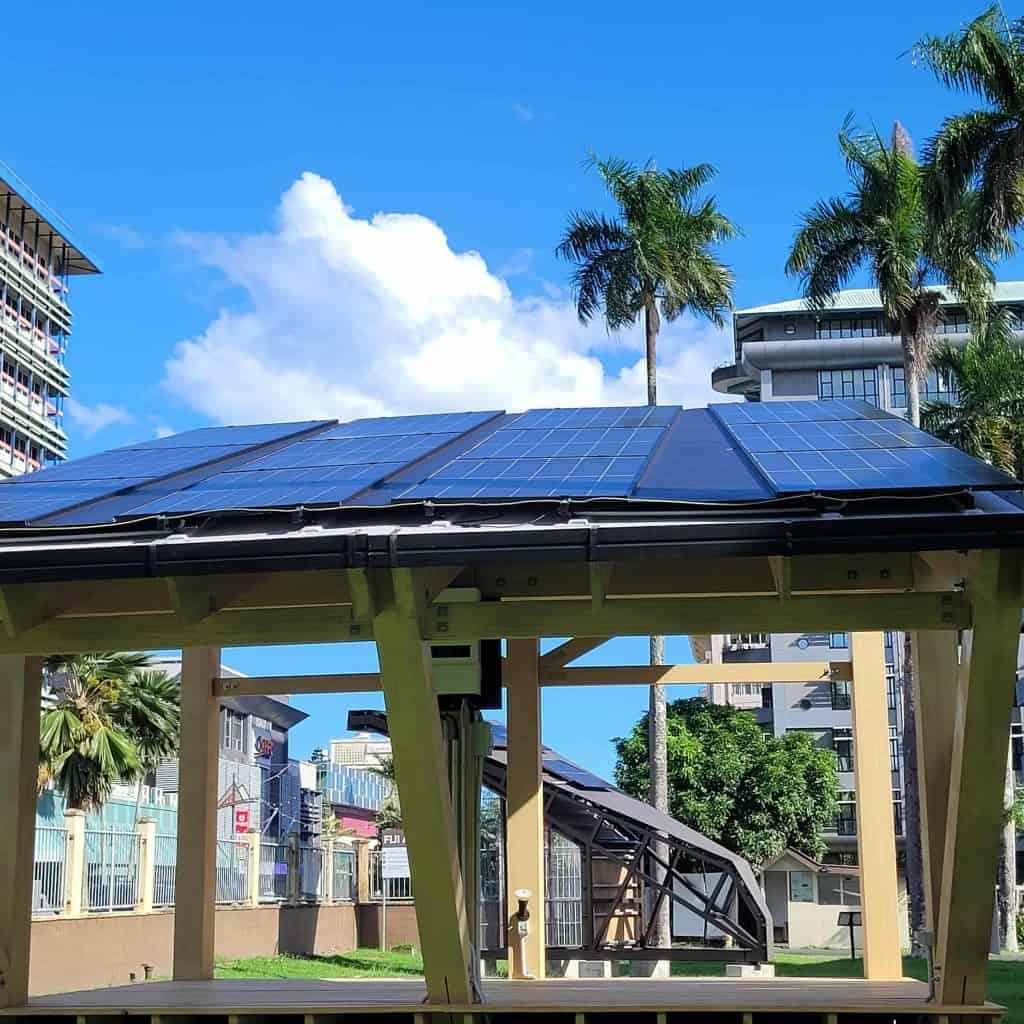
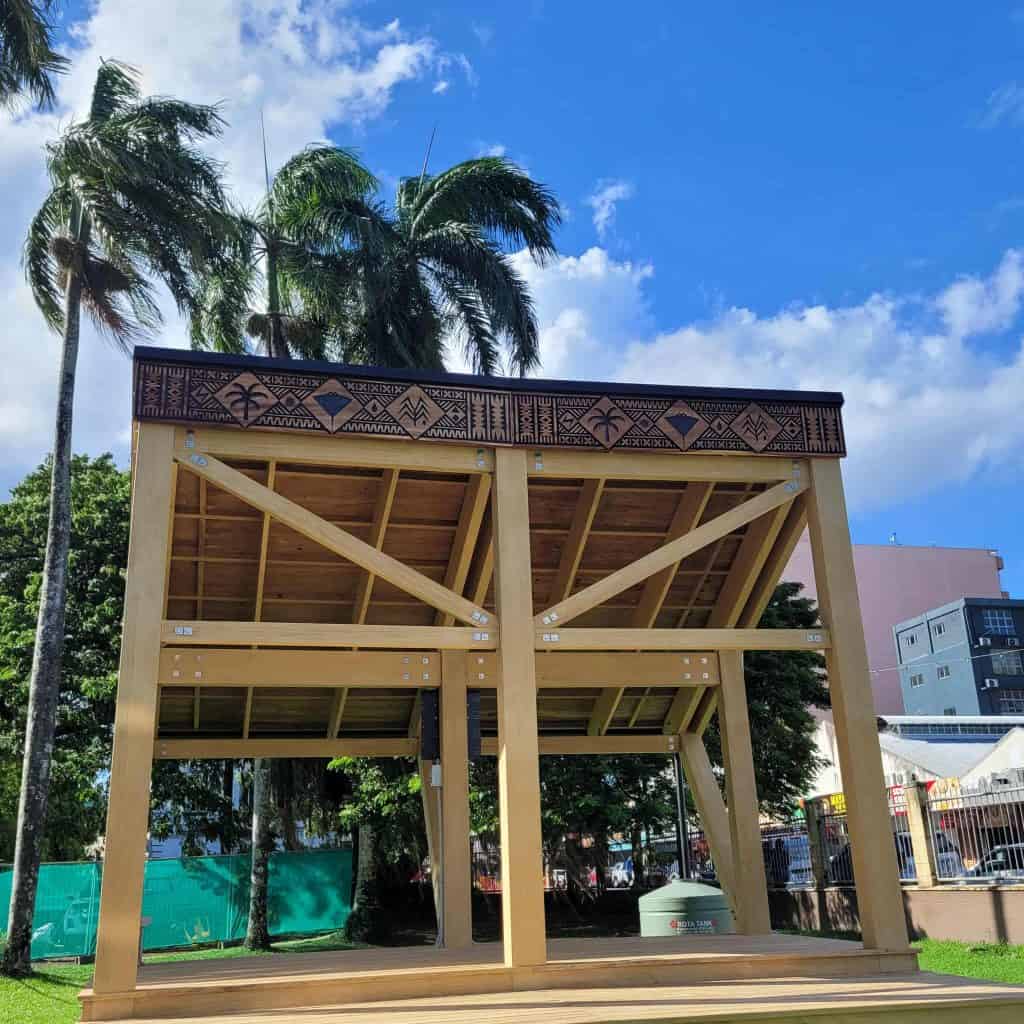
The two winning entries, ‘The O’ and ‘Ligavatuvure’ are now proceeding to prototype stage . Segments of each design will be constructed on the grounds of the National Art Gallery in central Suva early next year. A decision will then be made as to which one goes into full construction on the island. (Editor’s note: Since this article first appeared the prototypes have been built as seen in the images below)
The designers are working with local engineers, fabricators and a project manager to deliver these prototypes. They have also travelled to the project site to talk with village residents about their needs.
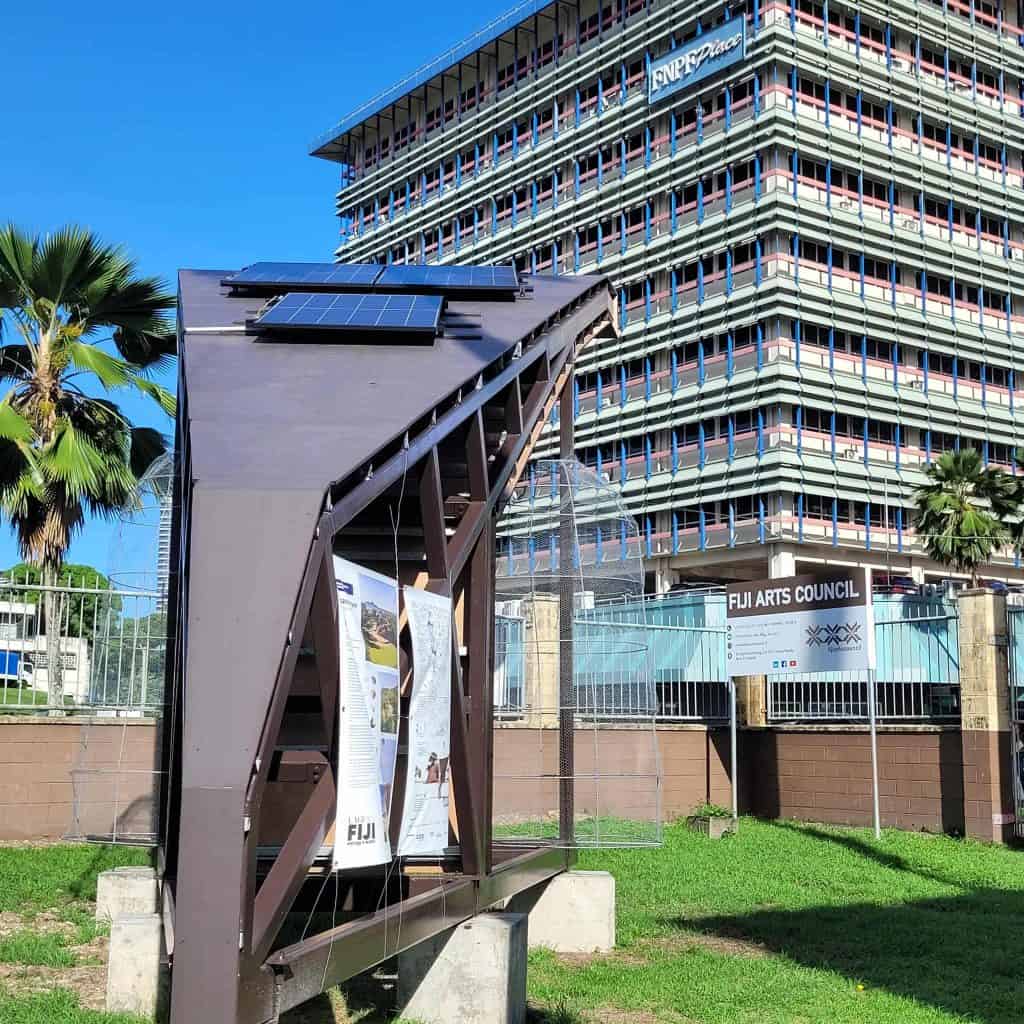
For the dramatic Ligavatuvure concept, the people of Marou talked with designer Young Kang about how the sculpture would sit harmoniously alongside the village and in the natural environment.
Young said he wanted to honour local culture in his design. He imagines Ligavatuvure would evolve, so that for example, the thatching might thin to show some of the— still beautiful—skeleton of the sculpture/hands over time.
He said he spent considerable time on deep research into Indigenous and local architecture and materials, emulating the yavu (stone platform) on which traditional bure kalou are built as the base for his own sculpture.
For Albert Roncelli’s ‘The O’, discussion in Marou centred around how the space under the solar canopy might be used. Ideas ranged from a handicraft market—residents are keen to host more tourists and homestay guests in the village—to a children’s playground, flower gardens and a small medical centre.
Roncelli says he conceived of ‘The O’ as a platform rather than a finished product, “then the community can design on top of it.”
His drawings gestured to traditional tapa or artistic marks, but again, the idea is to enable the village to customise this with symbols or designs of significance to the area.
Roncelli also designed ‘The O’ using a modular system, for simplicity of construction, transport of materials and maintenance.
Asked how he might imagine it being used in a decade, Roncelli smiles and says, “ I imagine coming in a little boat and wondering where is everyone? And then you walk up the hill and everyone is in The O. That would be a nice scenario.
“That the villagers are happy using it, that would be success.”