Emerging into the light of science
By Saruul Enkhbold
Every eight years, the upland forests of Fiji’s main island, Viti Levu, host one of the region’s most enigmatic natural events. The Nanai cicadas—large, rust-coloured insects known for their distinctive call—surface in synchronised numbers after spending most of a decade underground. While their sound is familiar to many Fijians and their image is celebrated on the Fijian $100 bill, the cicadas themselves are rarely seen. Until now, they have also been largely absent from scientific study.
A fleeting phenomenon
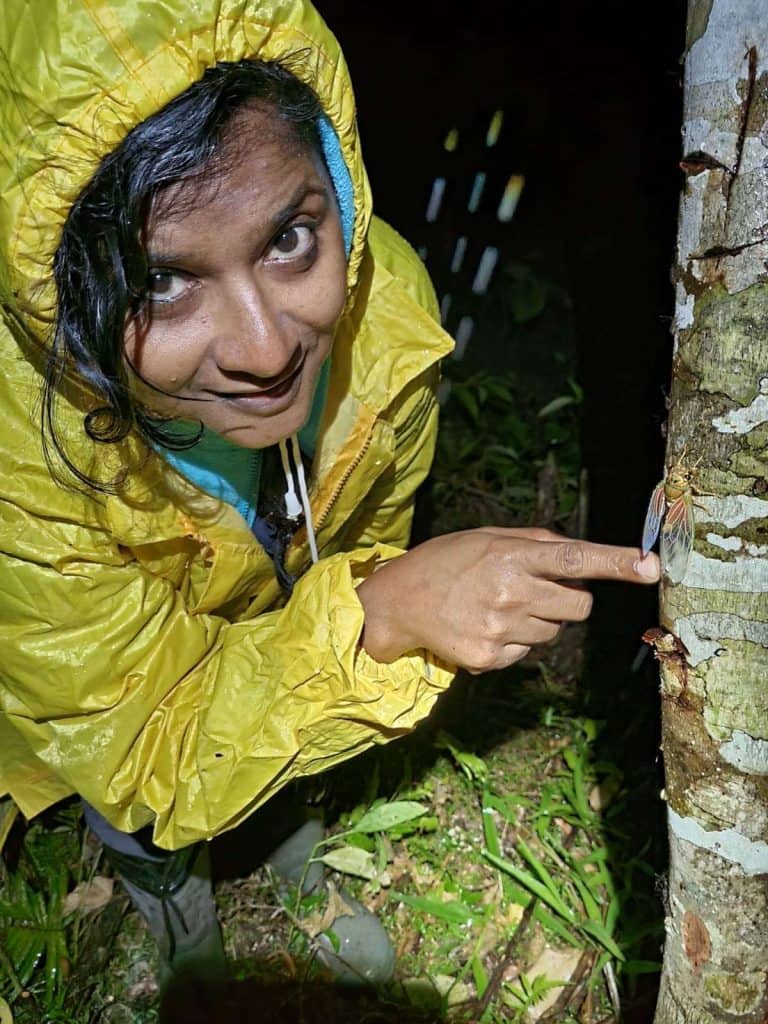
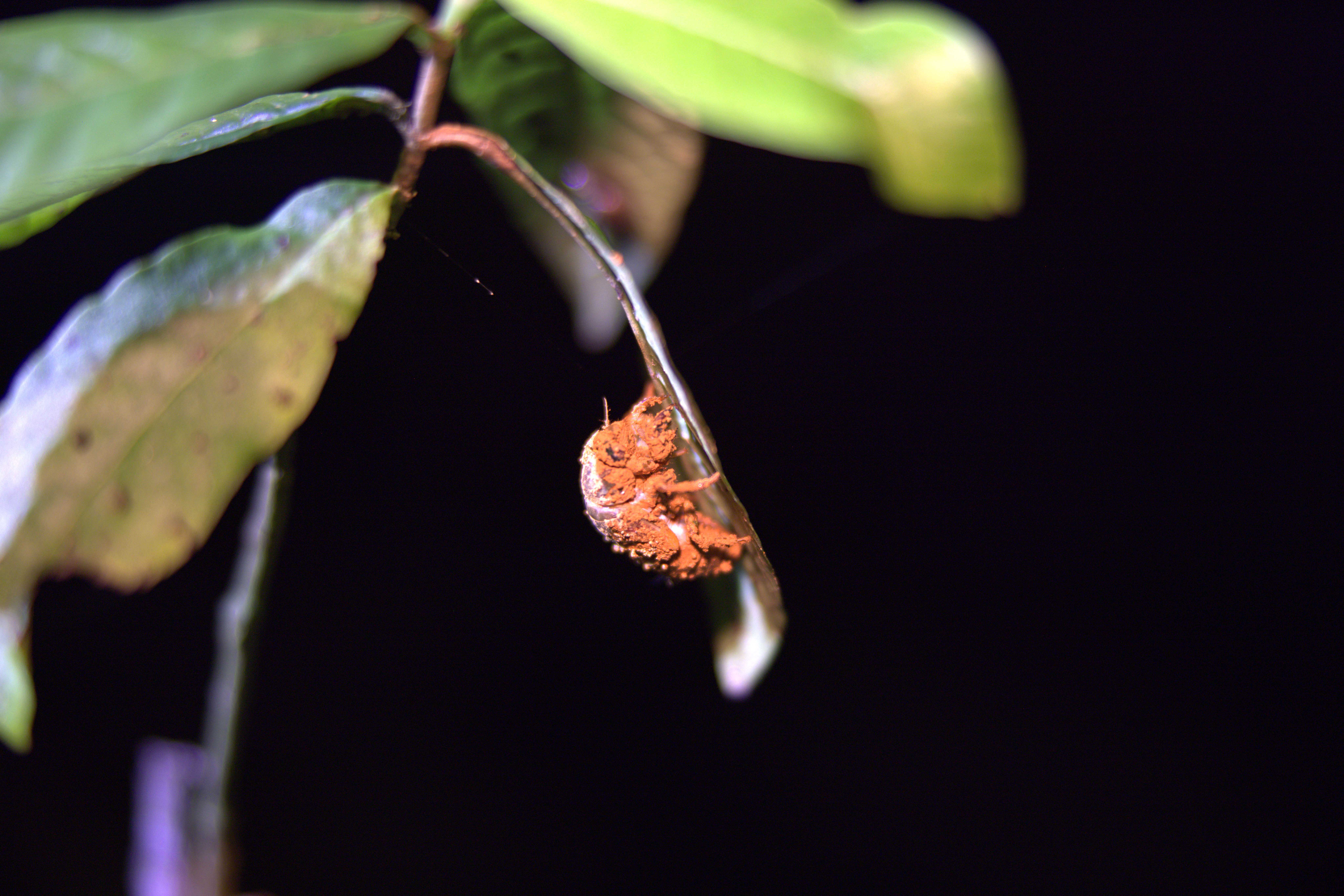
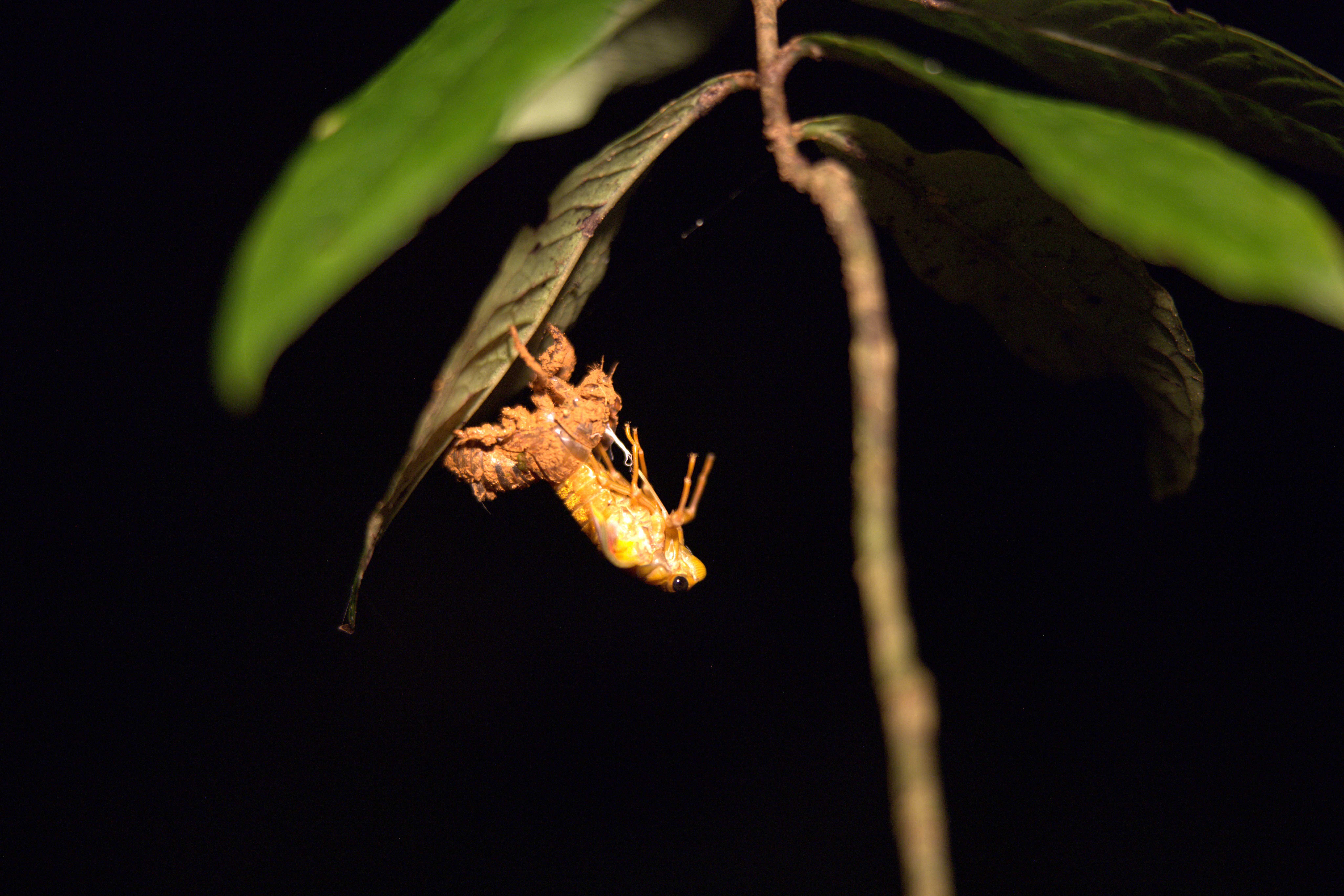
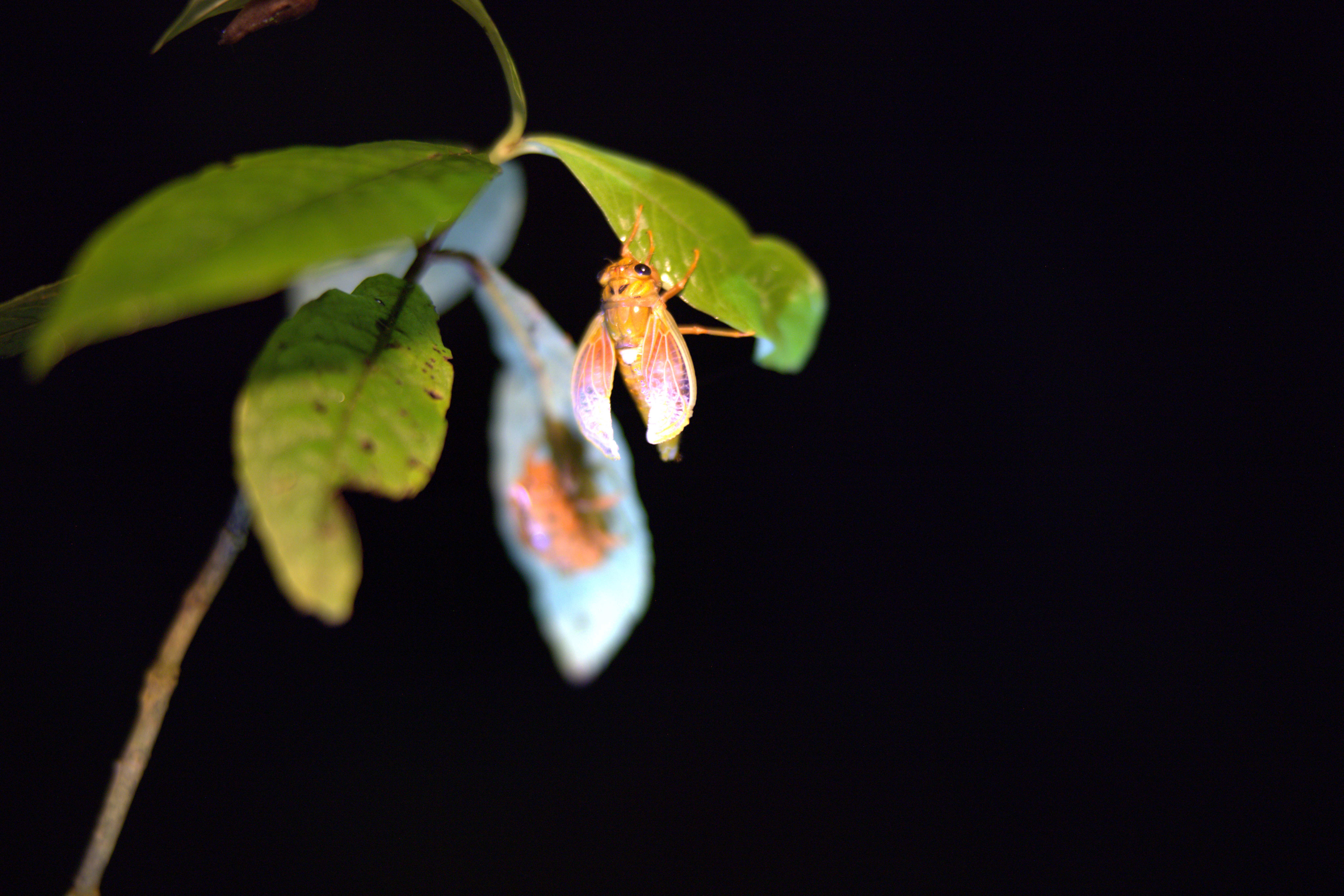
During a recent emergence, researchers, conservation groups, and eco-camp participants gathered in Namosi at Garrick Reserve to observe the cicadas directly. Under the cover of night, Nanai nymphs emerged from the soil, climbed tree trunks, and shed their exoskeletons to reveal their adult forms. For scientists, it was a critically short window to document a species that disappears again almost as quickly as it arrives.
“In Fiji we have 19 subspecies of cicadas, and all are found only in Fiji—nowhere else in the world. Of these, there is the Nanai cicada,” says Nunia Thomas, Director of Nature Fiji Mareqeti Viti, the only locally-run conservation society focused on collecting and mapping data for the species.
She highlights its global significance: “America has 17- and 13-year cicadas, India has 4-year cicadas, and Fiji has an 8-year cicada. It is so special and wondrous that an oceanic island has a long-life-cycle cicada so far away from the American and Asian continents.”
Building a scientific profile from the ground up
Although the emergence is spectacular, the science behind it is still developing. Fundamental questions remain: What environmental cues trigger their synchronised appearance? What conditions do the nymphs need during their long underground phase?
This is beginning to change. Avengeleen Swamy, the first entomologist to formally research the Nanai for her PhD thesis, is leading the effort to build the species’ first scientific profile.
“These species are seriously understudied, and I was looking for a topic with a lot of research and knowledge gaps. This struck a chord in me and ticked all the boxes,” says Swamy, a PhD candidate at the Fiji National University. “The more I read, the more intrigued I became, as this does not happen anywhere else in the southern hemisphere. That’s how I got into studying Raiateana knowlesi (the Nanai).”
Her research involves visiting emergence sites, collecting specimens, and recording environmental data to lay the foundation for long-term understanding.
Weaving tradition and science for conservation
A crucial part of the new research involves documenting traditional knowledge. A grant dispersed in 2024 is supporting this effort to merge scientific inquiry with cultural heritage.
“We had data only from the 80s, and we wanted to know what stories other tribes had and if there were any variations,” explains Nunia Thomas. “The main goal was to find out when it occurs, what the threats to it are, and based on all of that, we can develop a species action plan to ensure that its habitat is safe.”
Avengeleen Swamy echoes this objective: “Scientifically, we are looking at the life cycle and the ecology of the species. An additional key objective is to find out the traditional knowledge and the cultural significance to local communities, and how we can use that to identify potential threats. Later, in the bigger picture, we will use this knowledge to formulate conservation plans to help conserve these species for the future.”
The challenge of being “out of sight, out of mind”
For now, conversations about specific threats—such as land-use change and climate shifts—remain cautious, as none have been scientifically confirmed. However, Avengeleen points to a more fundamental challenge: the cicada’s long lifecycle leads to public forgetfulness.
“With the saying ‘out of sight, out of mind,’ the Nanai is the prime example,” she says. “There is a big hype when they emerge, but when they start dying, the hype dies too. There’s a lot of visibility about other endangered species because you can see them in zoos or on TV. But Nanai is forgotten about for the next eight years because it’s not visible… So I feel for the species that puts Fiji’s importance globally in the scientific world, in the entomology world, it is something we need to create more awareness and more campaigns for. “
A turning point for conservation
This year’s emergence marks a turning point. For the first time, a coordinated effort is underway to scientifically document the Nanai, laying the groundwork for future conservation. With each new observation, the species becomes less of a mystery and more of a measurable part of Fiji’s natural heritage. The next eight-year cycle will bring new data, clearer patterns, and—if the work continues—the knowledge needed to protect one of the country’s most unique natural events, ensuring it continues to shape these forests for generations to come.

This article first appeared in Fiji Traveller 11