“I love Fiji, it’s never been out of my heart,” says Jean Bish, the protagonist and heart of the documentary Fiji Memory, Colonial Time, part-way through the film.
Jean was born in Lami – just outside Suva – in 1925. A fourth- generation colonial, she had been away from Fiji for 40 years when her filmmaker daughter Alexandra Lacey, brought her back with the intention of making a documentary about her early life in the then-colony.
The film became a labour of love that took some 17 years and three more trips to Fiji to complete, and grew into a much more complex weaving of colonial and personal family histories; political commentary; reflections on aging, nostalgia and the connection between community, person and land; and an artist’s journey.
Lacey grew up with what she felt was a unique story and a unique person.
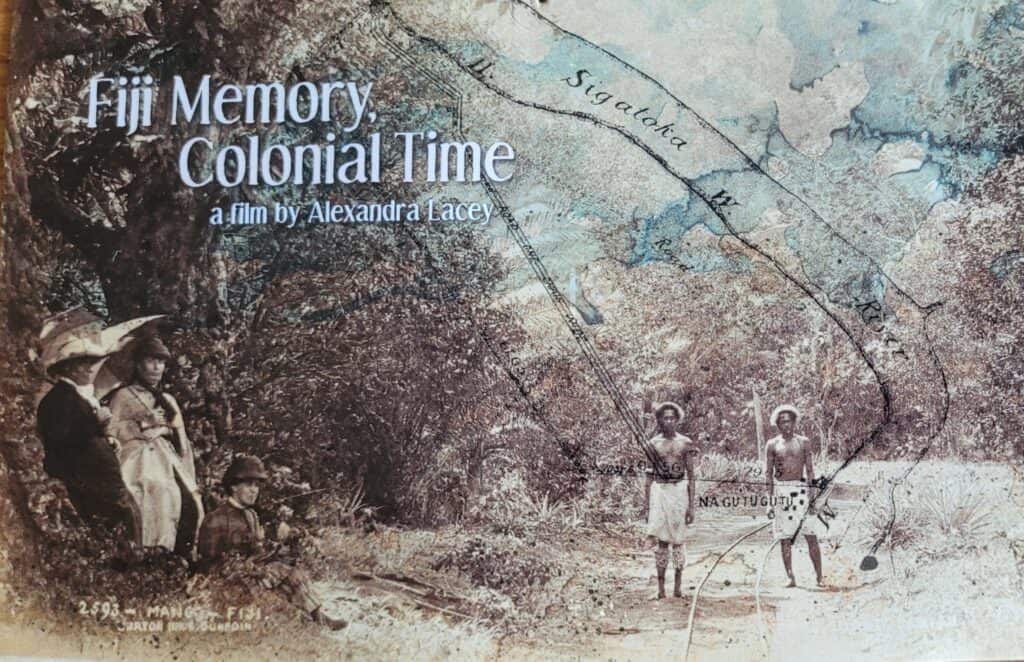
“My mother is a writer and a storyteller. I grew up listening to her stories, reading what she wrote about Fiji, and she evokes this really beautiful, magical but exotic place. And then I also grew up with these images, photographs of my ancestors, which to me, were very provocative and strange, of these British people, all their heavy clothes, standing in front of a jungle. And they seem so out of place. So, wanting to find out who these people were, and also [about] this kind of drive to go across the world and colonise it, or make your mark, or make your wealth through the extraction of another place.”
Narrative friction comes from the fact that her mother now holds strongly anti-colonialist and anti-racist views, yet has very happy and nostalgic memories of her privileged childhood growing up in Fiji.
“So that’s a tension, and it’s something that I wanted to explore too,” Lacey says.
Tension is also provided through the retelling of the story of Lacey’s great-great grandfather, the ‘tyrannical’ GH Lee, who was jailed for shooting an iTaukei man. This conflict demonstrated the wide gulf between the colonisers and Indigenous Fijians in understanding the complex relationships between people, land and the vanua.
While in story and style there is a strong historical foundation to the film, Lacey feels some of its themes are timely, such as one confronting scene where an interviewee expresses a brutally racist viewpoint.
“As hard as it is to hear, I think it’s important for all of us to know,” she says. “Unfortunately, in America right now, we’re hearing it all the time. It’s carte blanche to be as honest about your racism right now and dislike for others who aren’t like you. So I feel that it’s very relevant. And the legacy of colonialism right now internationally is very much part of what we’re still dealing with in conflicts all over the world.”
Fiji Memory, Colonial Time includes interviews with pre- eminent historians and social scientists, including the late Brij Lal and Ropate Qalo, who provide context and analysis of the impacts of colonialism on Fiji.
It also features contemporary artist Waqa Dreketi, who created some of the visuals for the film, and describes how his artistic practice is connected to his relationship with the land and environment.
Another strong theme in the film is memory, nostalgia and aging.
At one point, reflecting on how different her memories were from reality, Jean says: “What made me so teary-eyed was the feeling that this wasn’t real, everything that had been, was obliterated, was gone, it didn’t exist anymore. And perhaps I didn’t exist anymore.”
This sense of loss is somewhat assuaged when she meets someone from her childhood. Lacey says this was a profound moment for her mother, as she felt seen and so, ‘real’ again.
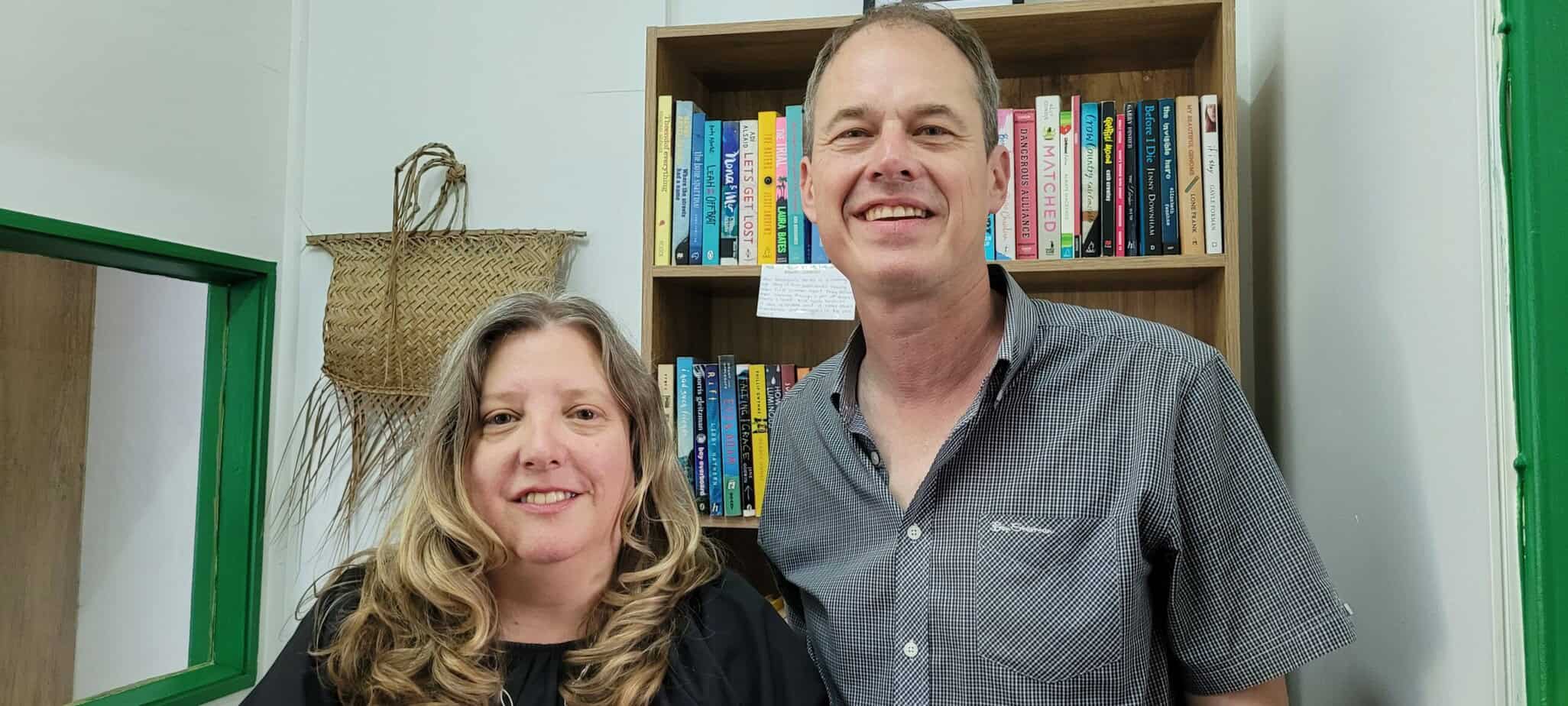
A very small team worked on the film during its long life in pre and postproduction. Wynn Newberry, Alexandra’s husband and the film’s coproducer says his role involved “a bit of detective work”, finding places, locations and people. “It was a lot of fun for me. Even though I’m not a movie producer by profession, Fiji was so welcoming and so fascinating.”
They both hope that Fiji Memory, Colonial Time –which has only been screened twice so far in Fiji – can be seen more widely and can “provoke discussion” about the legacy of colonialism, and “aging, our relationship to place and how it impacts us, and nostalgia.”
To learn more about Fiji Memory, Colonial Time, including any upcoming screenings, visit fijimemory.com