By Ernest Heatley
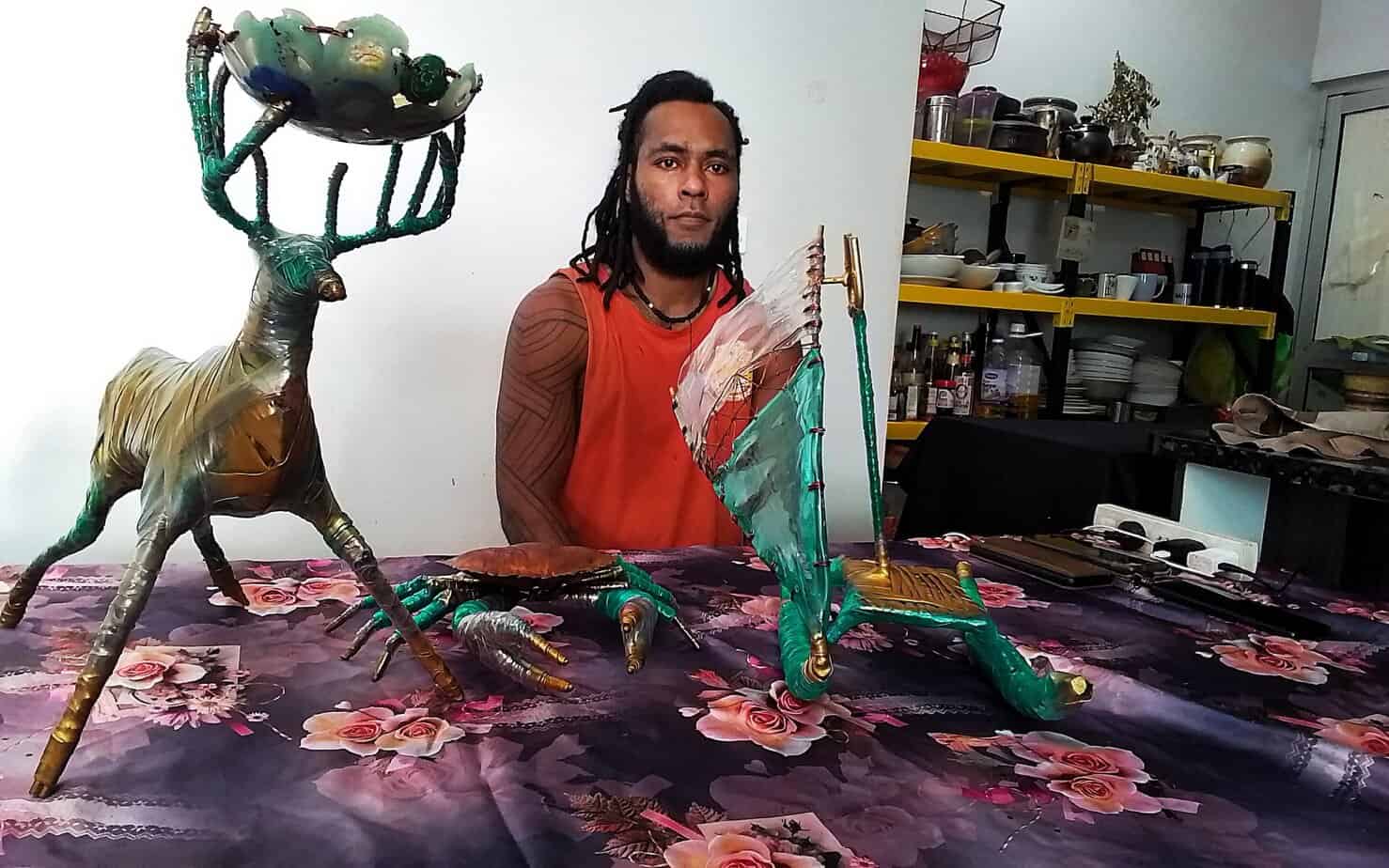
A young Nadi-based artist, Stanley Waradi, is redefining the boundaries of creativity through stunning sculptures made from discarded everyday items.
Thirty-year-old sculptor Waradi has turned cast-off materials into masterpieces, earning national recognition and a growing fan base.
Born and raised in Taveuni, Waradi recently took home the prestigious sculptor award at the Fiji National Fine Arts Awards. His pioneering works, crafted primarily from recycled materials, are not only visually captivating but also demonstrate the potential of sustainable art in Fiji.
Creative roots
Waradi comes from a uniquely artistic family, with his craftsman father and artist mother providing a fertile ground for his creativity to flourish. His mother, Sherry Usenia, recalls how Waradi displayed a
knack for crafting from an early age.
“He would spend hours taking apart broken radios or old toys, only to piece them back together into something entirely different,” Usenia shared. “It was as if he saw the world in a way no one else did. We encouraged him, but his drive and imagination were entirely his own.”
Waradi credits his family’s influence for his early start. “Growing up, I was surrounded by art and creation,” he said. “My father’s skill with tools and my mother’s ability to paint and sculpt inspired me to see potential in the ordinary. They taught me that art isn’t just something you make—it’s a way of thinking,” said the taciturn young artist from his workshop in a rural area outside of Nadi.
This may be a labor of love, but this is serious work and just like other tradesman, he has earned a good living off it. Although a man of few words, Waradi prefers to let his creations do the talking.
Finding his footing in art
Like many artists, Waradi’s artistic journey began with small steps, firstly experimenting in sculpture using wax and plastic, creating miniature installations that caught the eye of local artists.
“My first pieces were humble,” he explained. “I used whatever I could find—discarded items from under the house, the roadside, or scraps from workshops. Over time, I realised this wasn’t just about making art. It was about giving new life to things people throw away.”
One of Waradi’s defining moments came when he began crafting larger works from discarded umbrella frames, springs, and metal scraps. “Those materials spoke to me,” he said. “They had stories, and I wanted to tell them in a way people hadn’t seen before.”
Waradi’s journey gained momentum with the support of Craig Marlow, a seasoned artist who offered him a space to work in his Suva studio. Marlow introduced him to techniques like brass wiring but left the rest to Waradi’s raw talent.
“Stanley’s work is mind-blowing,” Marlow said. “Everything he creates comes from his imagination. I never coached him; I just provided the tools and space. With the right support, he can achieve international recognition as a sculptor working with recyclable materials.”
Marlow also facilitated Waradi’s move to Leleuvia Island Resort, after Colin Philp, the artistically-leaning late former manager at the resort, was captivated by an item Waradi crafted from plastic bottles.
The island offered a serene environment where he could hone his craft. It was here that Waradi, who became a resident artist for two years, honed the talents needed to produce some of his most iconic pieces, including larger-than-life sculptures that now grace the waters of resorts like Fiji Marriott Resort in Momi Bay.
A unique approach to sustainability and vision
For Waradi, art is more than just creating visually pleasing items—it’s a call to action. Waradi’s preferred style of art takes on deeper meaning given the crisis Fiji is grappling with in terms of the nation’s growing
litter problem.
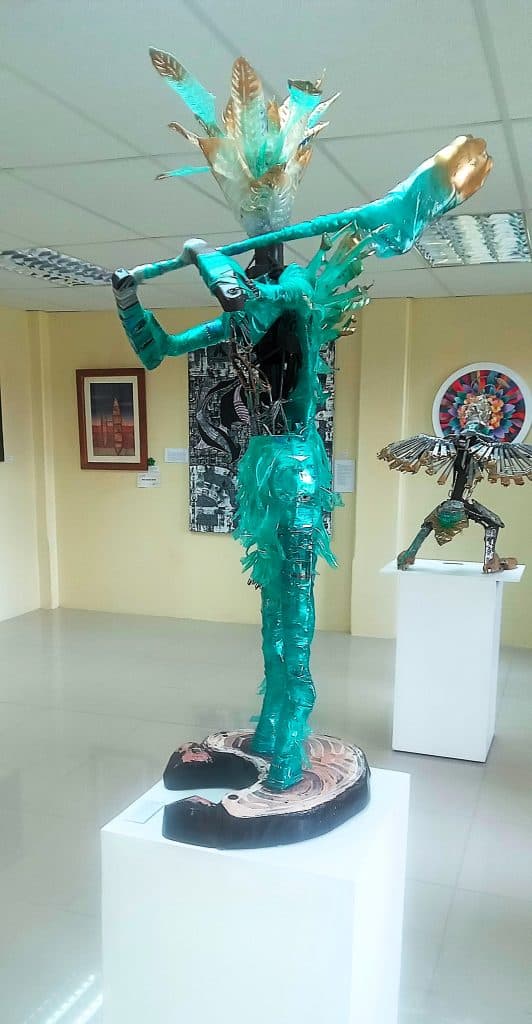
He crafts his pieces using things that would otherwise contribute to environmental pollution, such as plastic bottles, metal wire, and old appliances. His iron sculpture of a five-metre whale and 1.2-metre dolphins, are possibly his best-known works, although his smaller creations are also symbols of sustainability.
His main passion lies with using recyclable items like plastic and remains of old gadgets. “Nothing’s thrown away,” Waradi explained. “Every piece of material has a purpose. I want people to see that waste can be transformed into something beautiful.”
Well-known Fijian painter and National Art Gallery Project Officer, Irami Buli, is among Waradi’s most ardent supporters. “Stanley’s art is fascinating because it’s not just about creating—it’s about rethinking how we use resources,” Buli said.
“He’s elevating sustainable art in Fiji, and his work speaks to a global audience.”
Despite his growing fame, Waradi remains grounded and deeply connected to his roots. He dreams of a future where art becomes a central feature of Fijian public spaces.
“We have so much talent in Fiji,” Waradi said, his eyes lighting up with passion. “Imagine roundabouts with sculptures that tell our stories, or seawalls adorned with art that reflects our heritage.
Art can transform spaces and bring communities together.” Buli echoes this sentiment, envisioning monumental sculptures becoming cultural landmarks across the islands. “There’s untapped potential in sculpture,” he said. “It could become a defining feature of Fijian identity, just like in cities around the
world.”
Inspiring the next generation
Waradi hopes his journey will inspire other young Fijians to pursue their talents. “Art saved me,” he admitted. “I wasn’t academically gifted, but art gave me a purpose and a way to contribute to my community.”
His mother believes his story is a proof of the importance of nurturing talent. “Stanley’s success shows what can happen when you encourage a child to follow their passion,” she said.
“Fiji has so many gifted young people. They just need someone to believe in them.”
Although Waradi’s work creates attention locally, his ambitions remain rooted in creating meaningful art that resonates with sustainable practices.
“I want to see Fijian art recognised globally,” he said. “But more than that, I want to inspire people to think differently—about art, about waste, and about what’s possible when you dare to create.”
In his own unique way, the young artist is certainly helping shape a brighter, more sustainable future for Fijian art.